White Shirts: A Foundation of Men's Formal Dressing
The white shirt is the one garment that works in almost every professional setting. Understanding why it works makes it far easier to wear well.
Options Mall Menswear Journal — Mumbai
Ask a room full of well-dressed men which shirt they would keep if they could keep only one, and most would choose white. It is not the most exciting answer, but it is the most useful. A white formal shirt goes with every colour of suit and trouser, every tie, every shoe. It works in a boardroom, at a wedding reception, at an interview and at a dinner. It reflects light onto the face, frames a jacket cleanly and signals care without drawing attention to itself.
Because it is so familiar, the white shirt is also easy to take for granted. Not all white shirts are alike, and small differences in shade, fabric and collar change how one reads. This essay looks at what makes the white shirt the foundation of men's formal dressing, and how to choose and wear it with intention.
Why white works with everything
White is neutral in the truest sense: it carries no hue that could clash with another colour. Placed beside navy, charcoal, black, brown or beige, it provides contrast without competition. That is why a white shirt can be worn with a navy suit on Monday, grey trousers on Tuesday and a black blazer on Friday, and look correct each time.
It also creates a clean frame around the face. The collar of a white shirt sits directly beneath the jaw, and its brightness lifts the complexion, particularly under office lighting. For many skin tones, especially the warm and deeper tones common in India, crisp white offers a striking, flattering contrast.
A white shirt does not ask to be noticed. It makes everything worn with it look more deliberate.
Not every white is the same
Shirt whites range from a bright, optical white to softer off-whites and creams. A brilliant white looks sharp and modern, and suits formal occasions and dark suits. An off-white or ivory is gentler, sits more easily with tan, beige and earthy tones, and can be kinder to very fair complexions that look washed out against stark white.
When choosing, hold the shirt near your face in natural light if you can. You will usually see quickly which shade brightens your skin and which flattens it. For a first white shirt, a clean, true white is the most versatile choice. You can find more on how shades interact in our guide to formal shirt colours.
Fabric changes the character
The same colour looks different in different weaves. White is especially revealing because there is no pattern to distract from the cloth's surface.
- Poplin is smooth, light and crisp, with a slight sheen. A white poplin is the classic business formal shirt: clean under a suit and cool enough for warm weather.
- Oxford has a visible basket-like texture and a softer, heavier hand. A white oxford reads more relaxed and suits business-casual days.
- Twill shows a fine diagonal rib and drapes well. It tends to resist creasing better than poplin and has a subtle depth that photographs well.
- Textured weaves such as dobby or fine herringbone add interest while keeping a formal look from a distance.
Our fabric notebook explains each weave in detail, and the essay on the difference between poplin, oxford and twill compares them directly.
Styling the white formal shirt
The white shirt's versatility is an opportunity rather than an excuse. A few considered pairings show how far it can go.
With navy
White with navy trousers or a navy suit is perhaps the most dependable combination in menswear. Add a burgundy or deep green tie for meetings, or leave the collar open with a navy blazer for a smart-casual evening.
With grey
Grey is calmer and more understated. Charcoal trousers with a white shirt look authoritative; mid-grey looks lighter and suits daytime. A pale blue or silver tie keeps the palette cool and tidy. See the grey trousers section for more.
With black
A white shirt with black trousers is high contrast and very formal, well suited to evening events. Keep the shoes black and polished, and consider a slim dark tie.
With a tie
White is the safest canvas for a patterned tie, because nothing in the shirt competes. If you are still learning to combine patterns, start here. The tie pairing guide walks through the principles.
Beyond plain white
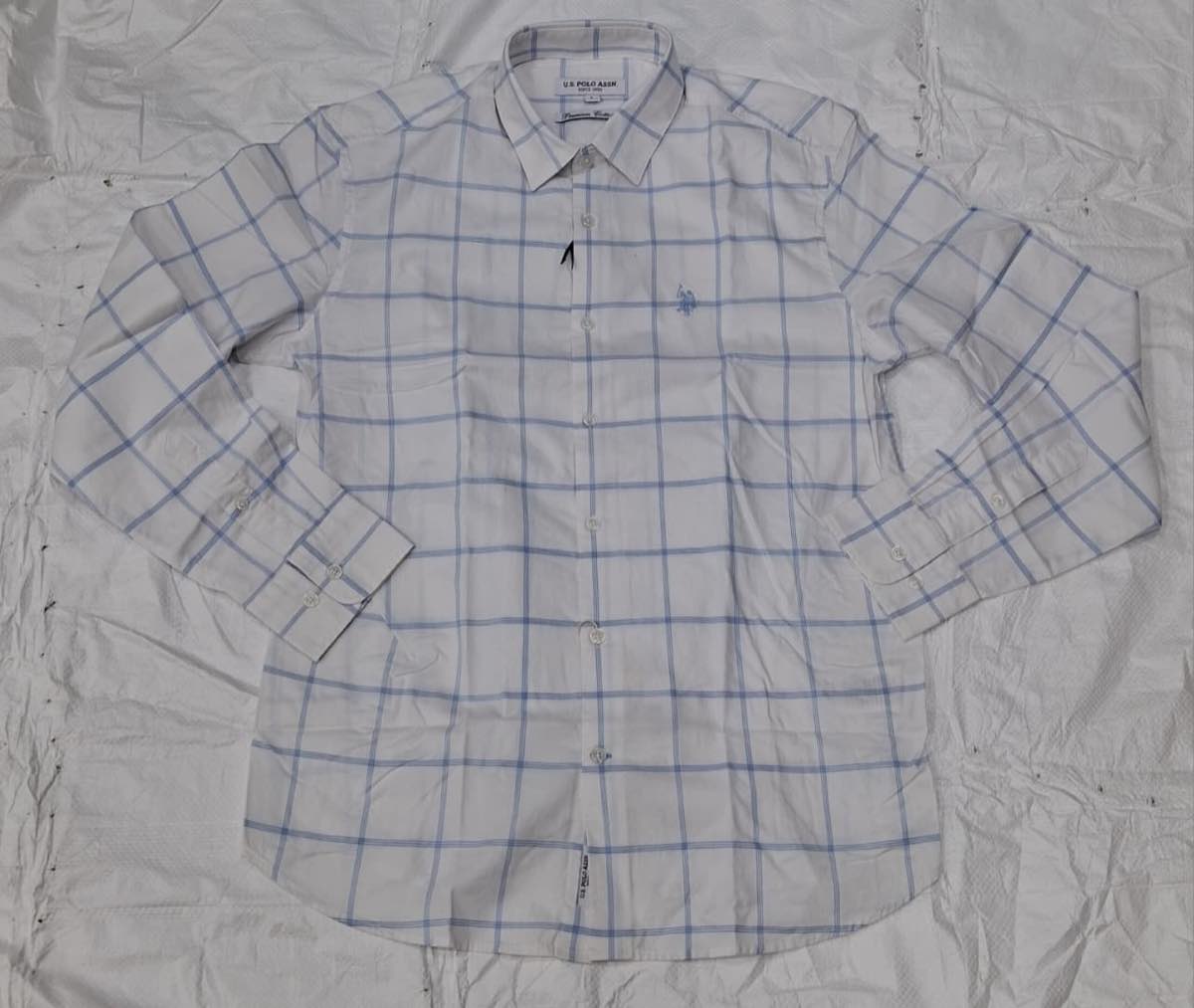
A white shirt need not be entirely plain to keep its versatility. A white ground with a fine blue windowpane check, like the shirt pictured at the top of this essay, retains much of white's freshness while adding a little structure. It pairs well with navy and grey trousers and can be worn without a tie on business-casual days.
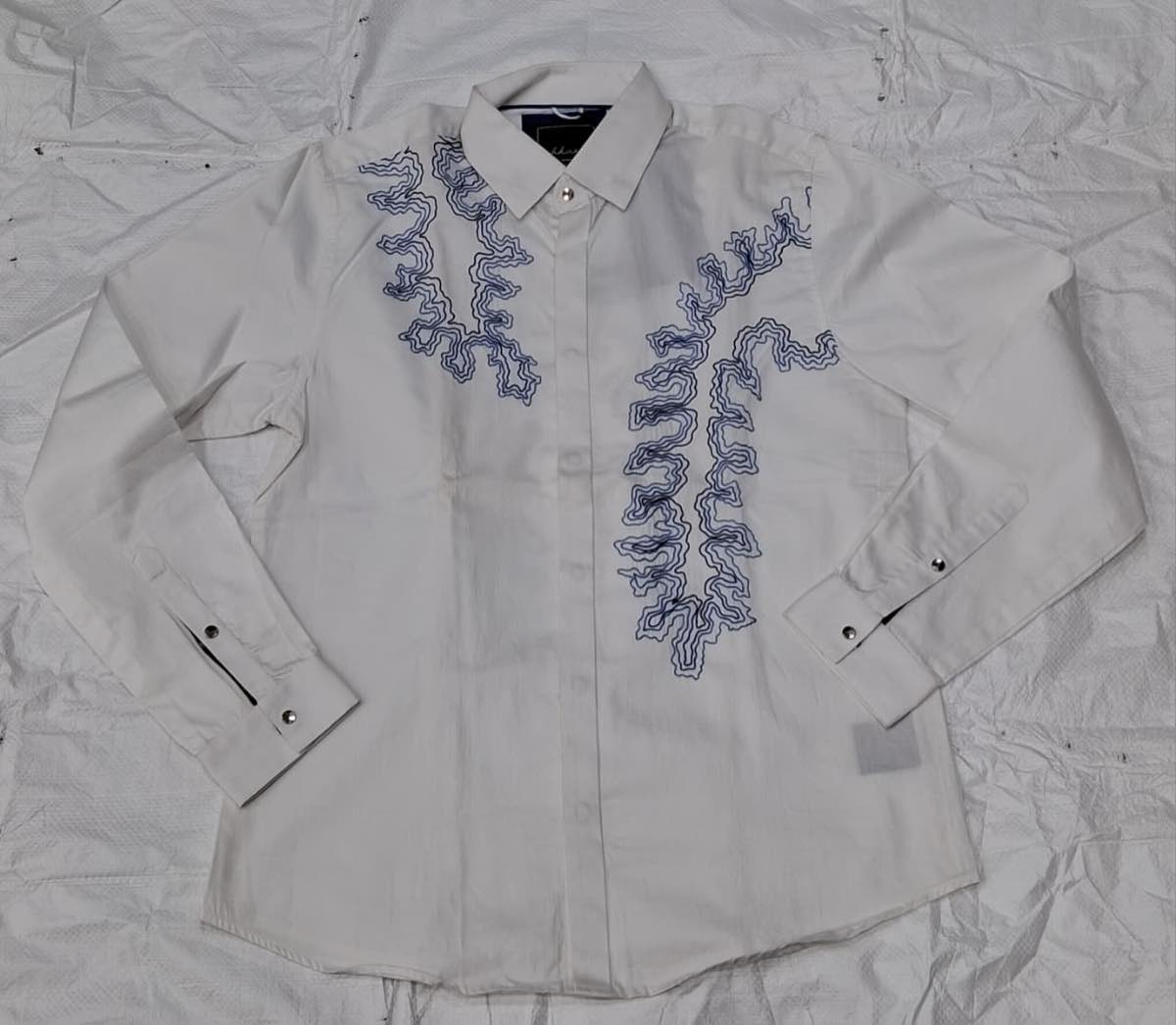
Embroidered whites sit at the other end of the spectrum. The shirt above uses a white ground, but the bold blue embroidery turns it into a statement for social occasions rather than a formal staple. It is a useful contrast: what makes a plain white formal shirt so adaptable is precisely its restraint. Once decoration enters, the shirt starts to lead the outfit rather than support it.
For the office, white with subtle self-stripes, fine checks or tonal textures offers variety without losing that supporting role. Explore more in the white shirts section of the formal shirt index.
Keeping white bright
White shows wear more readily than any other colour, so care matters. Wash white shirts separately or with other whites. Treat collar and cuff marks promptly, before they set. Go easy on chlorine bleach, which can yellow some blended fabrics over time, and iron while slightly damp for the cleanest finish. Rotating several white shirts through the week, rather than relying on one, also helps each last longer.
Start with a true white in smooth poplin or twill with a semi-spread collar. Add a softer white oxford for relaxed days. Then consider a white with a subtle pattern. Three white shirts cover a remarkable range of professional situations. Our shirt care notes cover washing and ironing in more depth.
Building a wardrobe around white
The white shirt is the starting point of almost every sensible professional wardrobe. Once you have one or two that fit well, the next additions, typically light blue and then a few stripes or checks, can be chosen to complement them. Our essay on blue formal shirts picks up exactly where this one ends, and building a capsule business wardrobe shows how the pieces come together.
In the end, the white shirt earns its place not by being remarkable but by being reliable. Choose the right shade for your complexion, the right fabric for your working day and a collar that suits your face, and it will serve you in more situations than any other garment you own. To see white formal shirts in person, visit Options Mall in Vile Parle West or call +91 8369381345 to ask about current styles.