Understanding the material behind the shirt. The men's shirt fabric guide — cotton formal shirts, weaves, texture & care
Fit is what people see first. Fabric is what you feel all day — in a humid morning commute, a long air-conditioned meeting and the walk home in the evening.
This notebook is laid out like a small exhibition of cloth. Each exhibit describes the general character of a fabric or weave: how it looks, how it behaves and when it makes sense. Treat it as a guide to what to look and feel for, not as a description of any particular garment.
Room 1 — Structure
How cloth
is built
Every woven shirting is made of two sets of yarn: the warp, running the length of the cloth, and the weft, passing across it. The pattern in which they cross — the weave — shapes the surface, the feel and much of the behaviour of the finished shirt. Three weaves account for most formal shirts.
-
Draft W/01
Plain weave
Over one, under one. The simplest and tightest interlacing, giving a flat, even surface. Poplin and broadcloth are plain weaves.
-
Draft W/02
Basket weave
Yarns grouped and crossed together, like a woven basket. The surface shows a small, chequered grain. Oxford cloth is built on this principle.
-
Draft W/03
Twill weave
Each pass steps one yarn along, so the crossings line up into fine diagonal ribs. Twills tend to drape softly and show a gentle sheen.
Warp on top Weft on top — schematic drafts, enlarged and simplified
Exhibit F/01 — Fibre
Cotton
The foundation of formal shirting
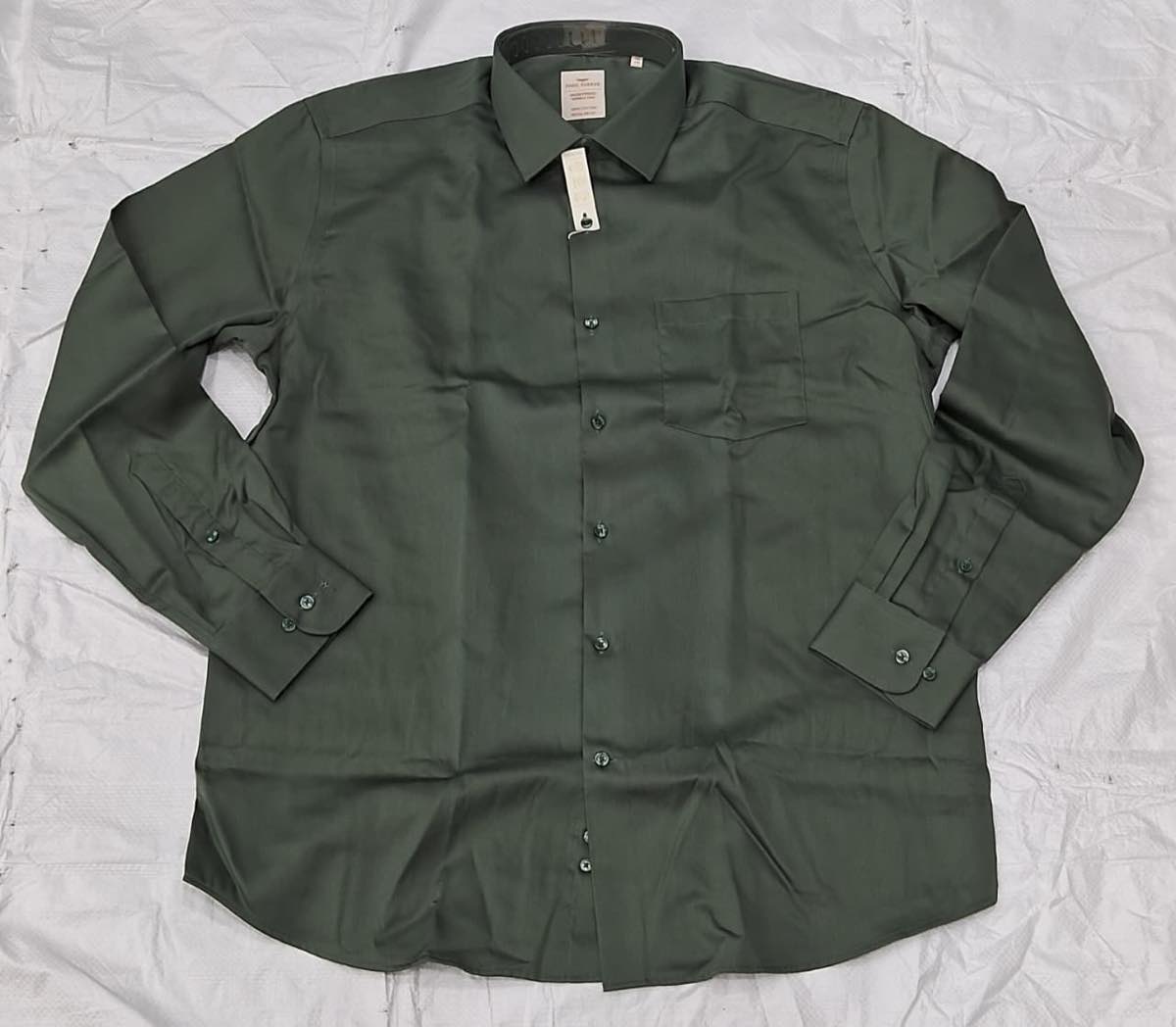
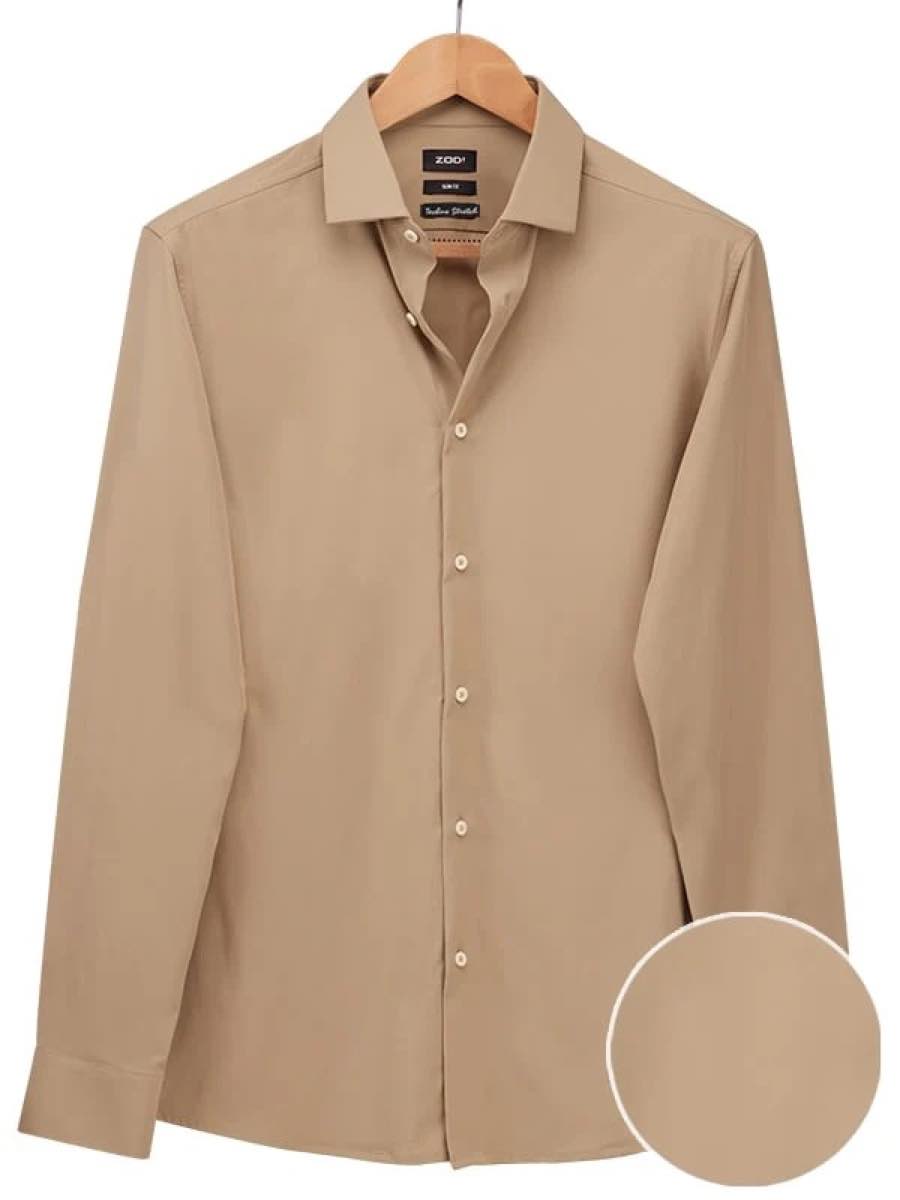
Most cotton formal shirts begin with a natural plant fibre that has been the backbone of shirting for generations. Cotton is generally comfortable against the skin, takes colour well and allows air to move through the cloth — qualities that matter in a warm, humid city.
Cotton is a fibre, not a weave. The same cotton yarn can become a smooth poplin, a textured oxford or a soft twill, which is why “cotton shirt” describes what a shirt is made of rather than how it looks. Finer, longer fibres tend to produce smoother, softer yarns; coarser yarns give a more rustic hand.
Its main trade-off is creasing: pure cotton wrinkles more readily than many blends and usually benefits from ironing. Many men accept that in exchange for comfort and breathability.
- Feel
- Natural, soft to crisp depending on weave
- Breathability
- Generally good
- Wrinkles
- Creases readily; irons well
- Best for
- Everyday office wear, warm weather
Exhibit F/02 — Plain weave
Poplin
Smooth, crisp and quietly formal
Poplin — often called broadcloth — is a tightly woven plain weave, usually with fine yarns packed closely together. The result is a flat, smooth face with a subtle lustre and a clean, crisp hand. It is the classic choice for business formal shirts and the cloth most people imagine when they picture a sharp white or light blue shirt.
Because the surface is so even, poplin shows colour clearly and takes a press well, which keeps collars and plackets looking precise under a tie. Lighter poplins feel cool and airy; the trade-off is that very fine poplin can be slightly sheer in pale colours and creases where you bend.
- Surface
- Smooth, flat, faint sheen
- Weight
- Typically light
- Formality
- High — suits and ties
- Pairs with
- Spread & semi-spread collars
Exhibit F/03 — Basket weave
Oxford
Texture with a relaxed confidence
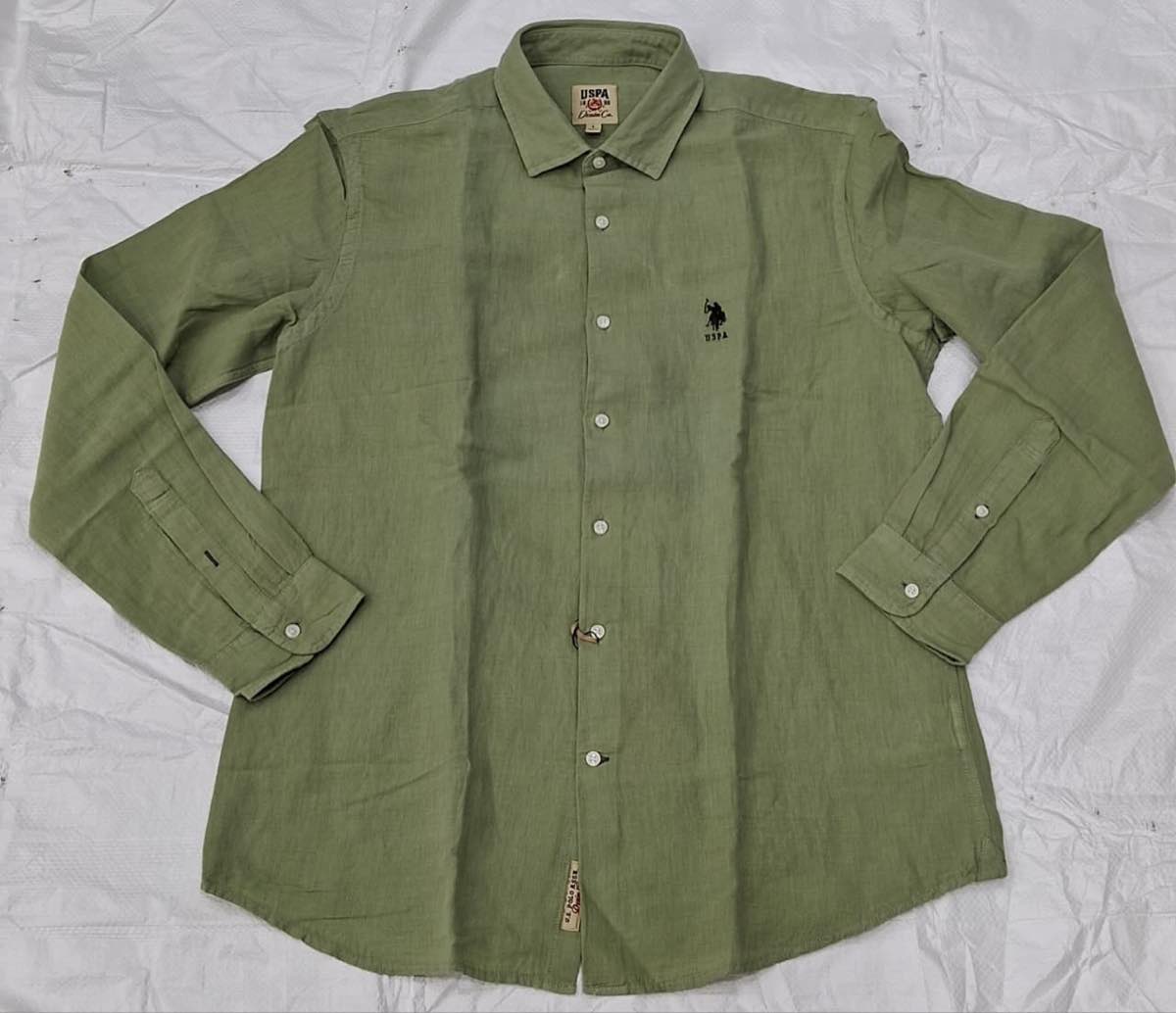
Oxford cloth uses a basket-type weave, with yarns grouped as they cross. Often a coloured yarn is woven against a white one, which gives oxford its slightly flecked, two-tone look. The surface has a visible grain and the cloth is usually a little heavier and more substantial than poplin.
That texture makes oxford durable and easy-going: it softens with washing, forgives the odd crease and sits naturally with a button-down collar. It belongs to smart-casual days, Fridays and blazer-and-chinos dressing more than to formal suits. A finer variant, often called pinpoint oxford, narrows the gap — smoother and dressier, while keeping a hint of texture.
- Surface
- Visible grain, often two-tone
- Weight
- Medium
- Formality
- Smart-casual to business casual
- Durability
- Sturdy; softens with wear
Exhibit F/04 — Diagonal weave
Twill
The diagonal line, from fine shirting to denim.
In a twill, each row of interlacing steps one yarn along from the row before, so the crossings form fine diagonal lines across the cloth. Look closely at a twill shirt and you will see them; from a distance they read as a soft, rich surface with a gentle sheen.
Twill generally drapes more fluidly than poplin, feels softer in the hand and tends to resist creasing a little better, which makes it a comfortable choice for long days. Fine shirting twills are fully formal; herringbone is a twill that reverses direction to make a zigzag.
Denim is the most familiar twill of all — heavier, sturdier and firmly casual. The same diagonal that gives a fine twill its polish gives denim its toughness.
- Shirting twill
- Fine yarns, a subtle diagonal and a soft sheen. Fully formal, and comfortable through a long day.
- Herringbone
- A twill that reverses in bands to form a zigzag. Textured up close, solid from a distance.
- Drill & heavier twills
- Sturdier, tighter cloths that lean towards overshirts and casual wear.
- Denim
- A robust cotton twill, traditionally with a coloured warp and white weft — casual by nature.
- Not to be confused: chambray
- Looks like a light denim but is a plain weave, so it has no diagonal and feels lighter.
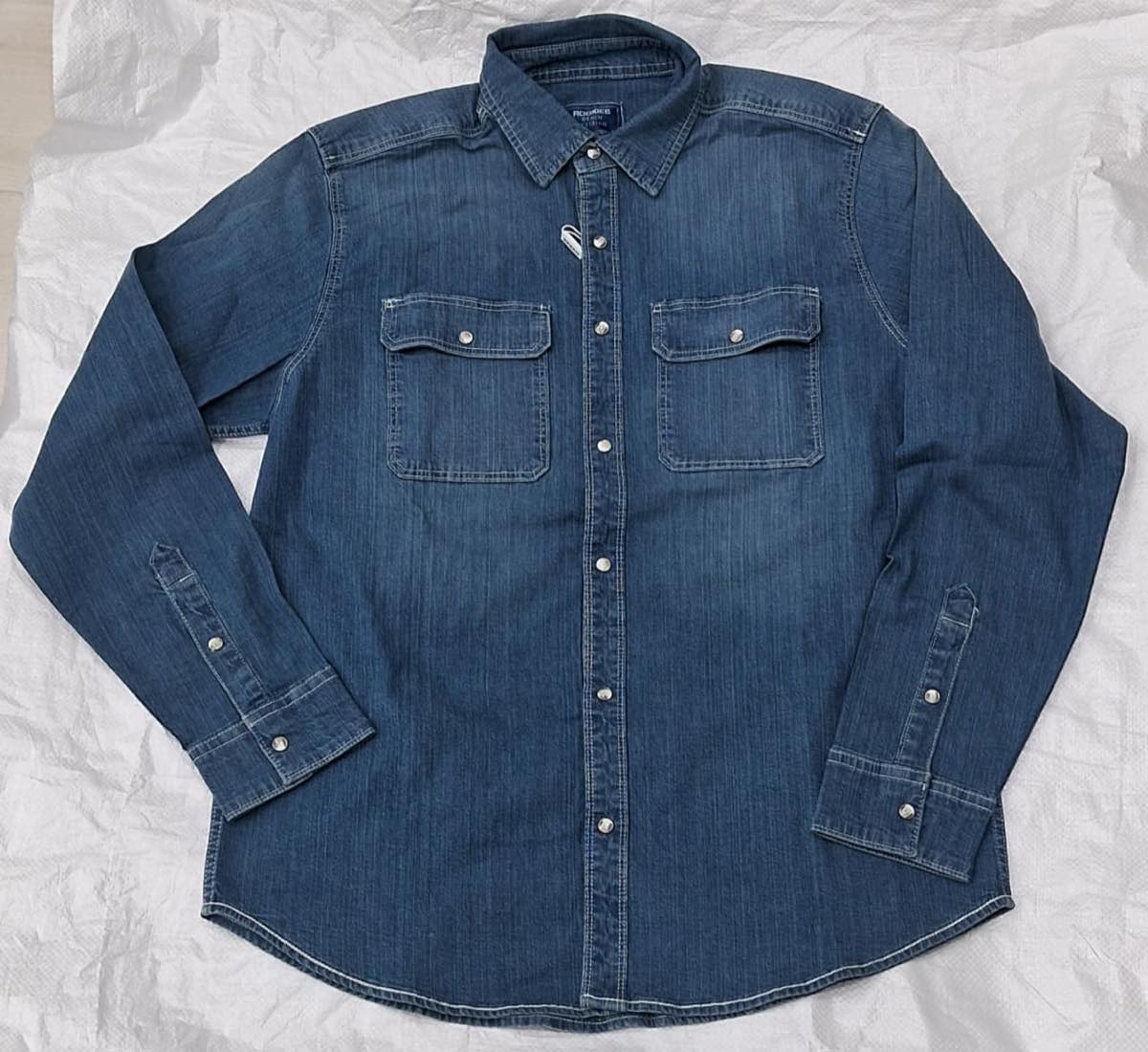
Exhibit F/05 — Mixed fibres
Cotton blends
Cotton, combined for a purpose
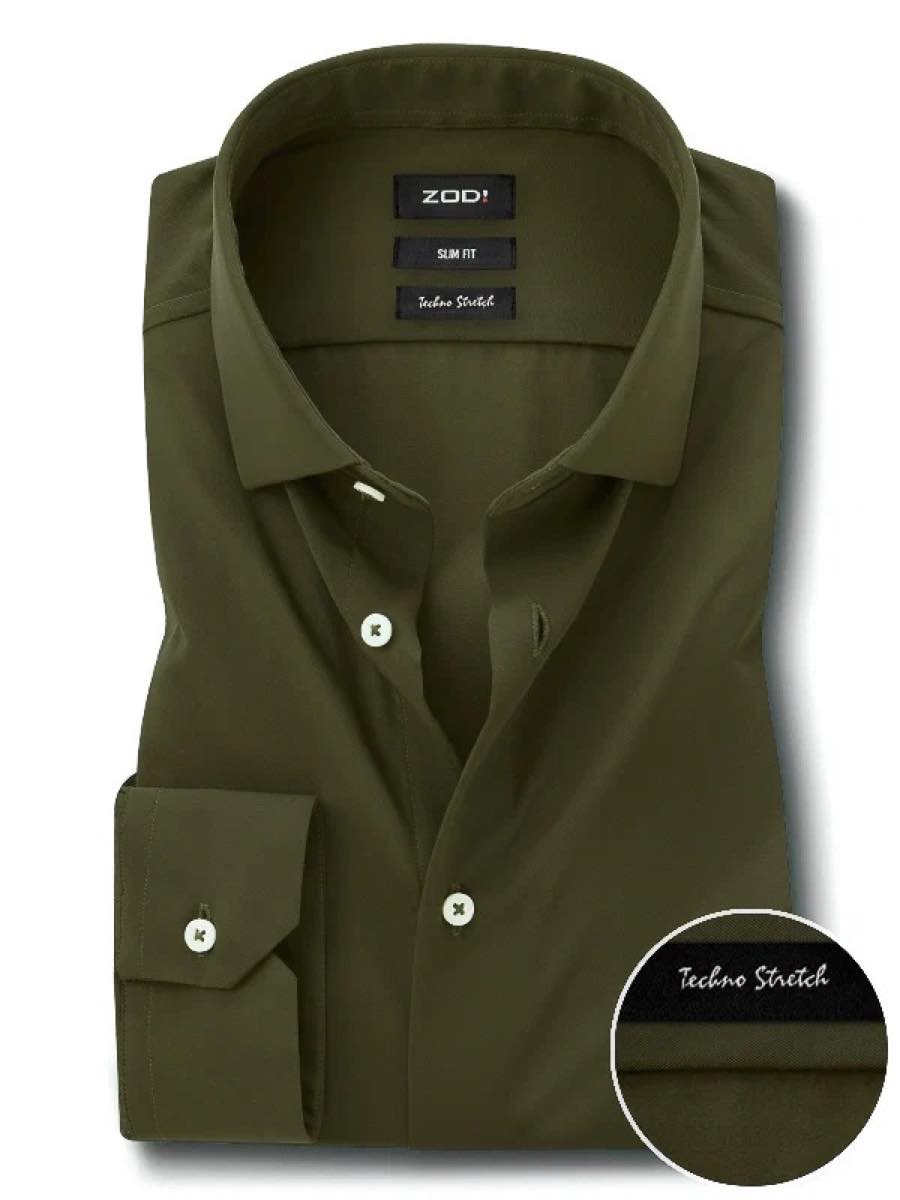
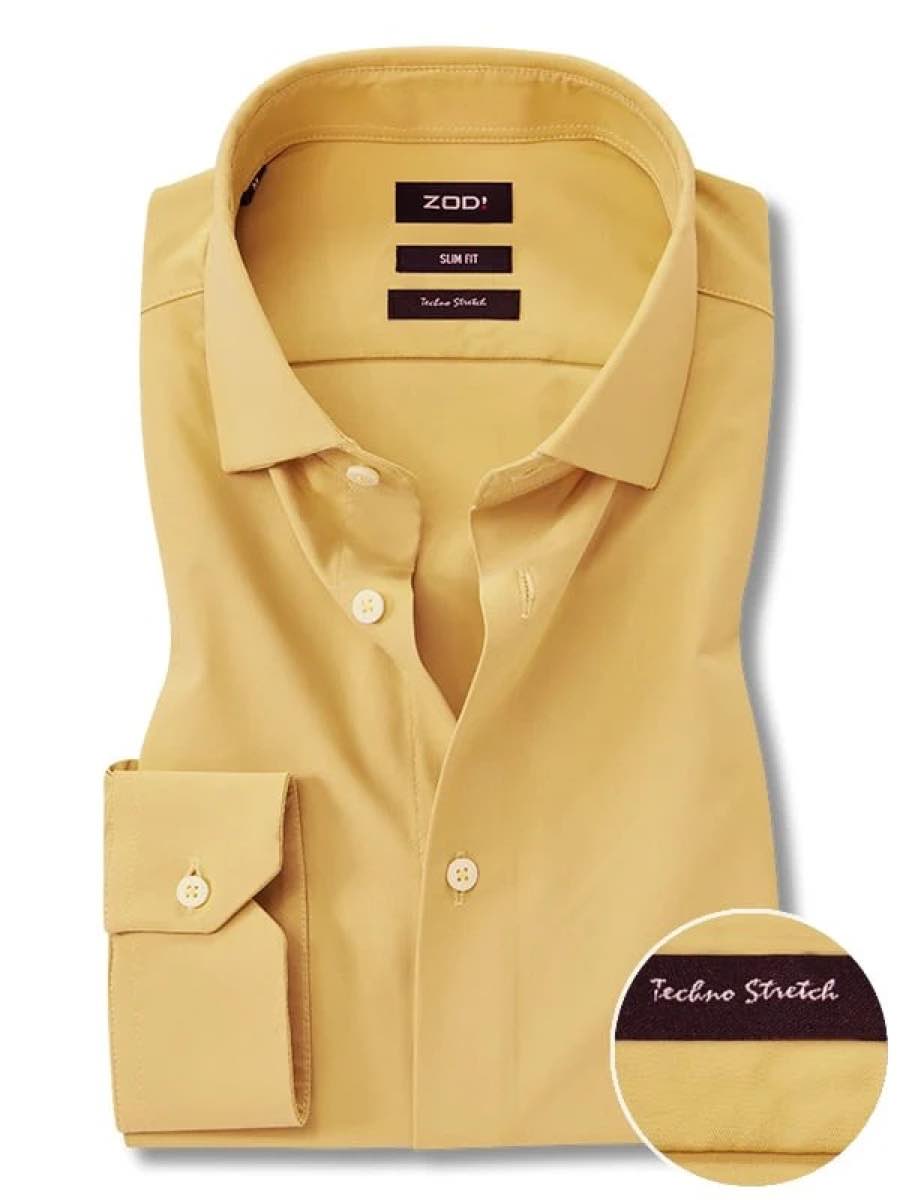
A blend combines cotton with one or more other fibres. What it feels like depends entirely on the mix, so the label matters more here than anywhere else. Some broad, general tendencies:
- Cotton and polyester — usually easier care: quicker drying and fewer creases, though often less breathable than pure cotton.
- Cotton with a little elastane — adds stretch and recovery, so slimmer fits move with you.
- Cotton and linen — a drier, more textured hand with an airy feel, and some of linen's tendency to crease.
- Cotton and viscose or similar fibres — a softer, smoother drape.
Blends suit busy weeks, travel and long days when you want a shirt to look composed with little effort. For the most breathable option in heat, a high cotton content is generally the safer choice.
Exhibit F/06 — Surface
Textured fabrics
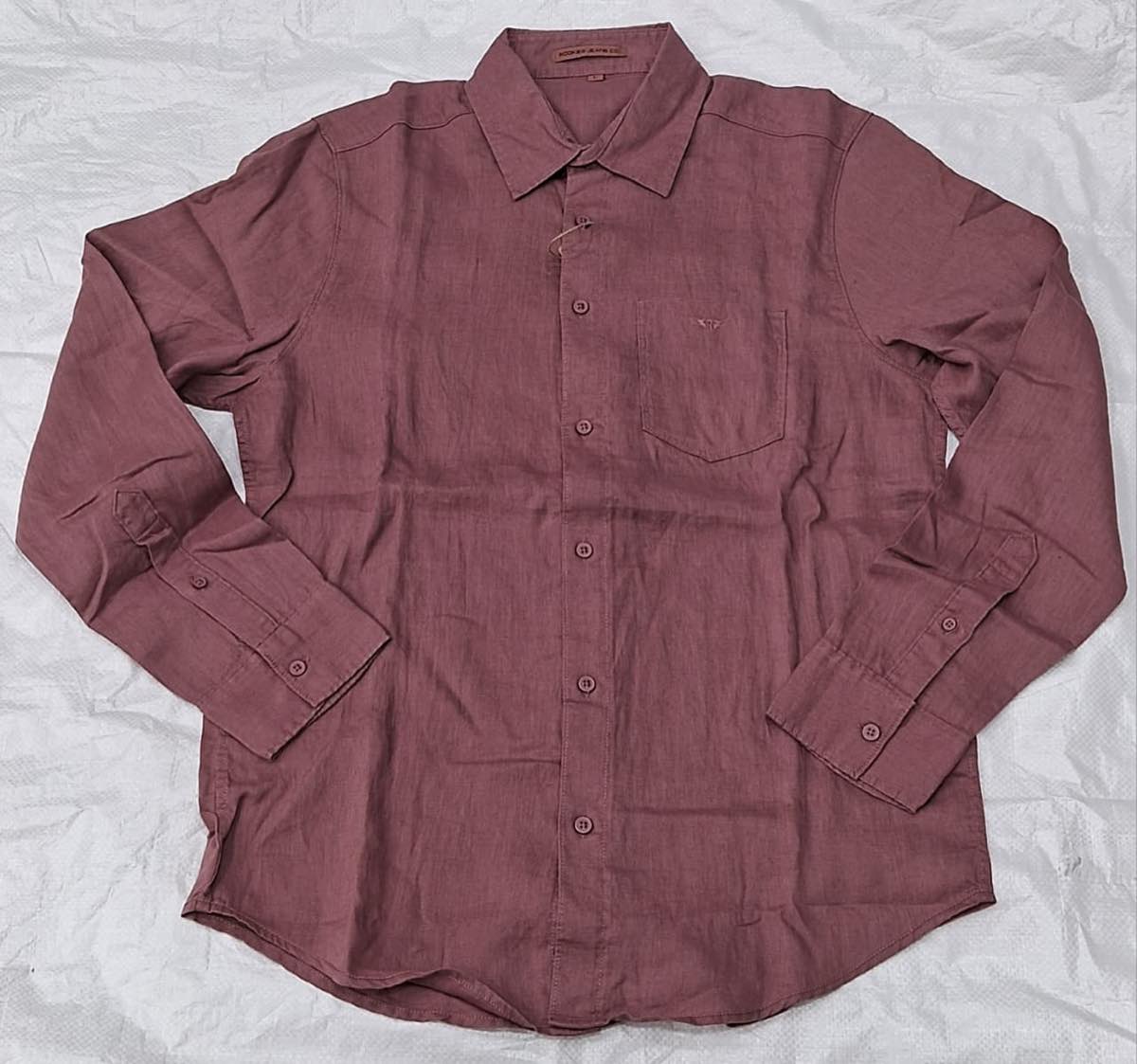
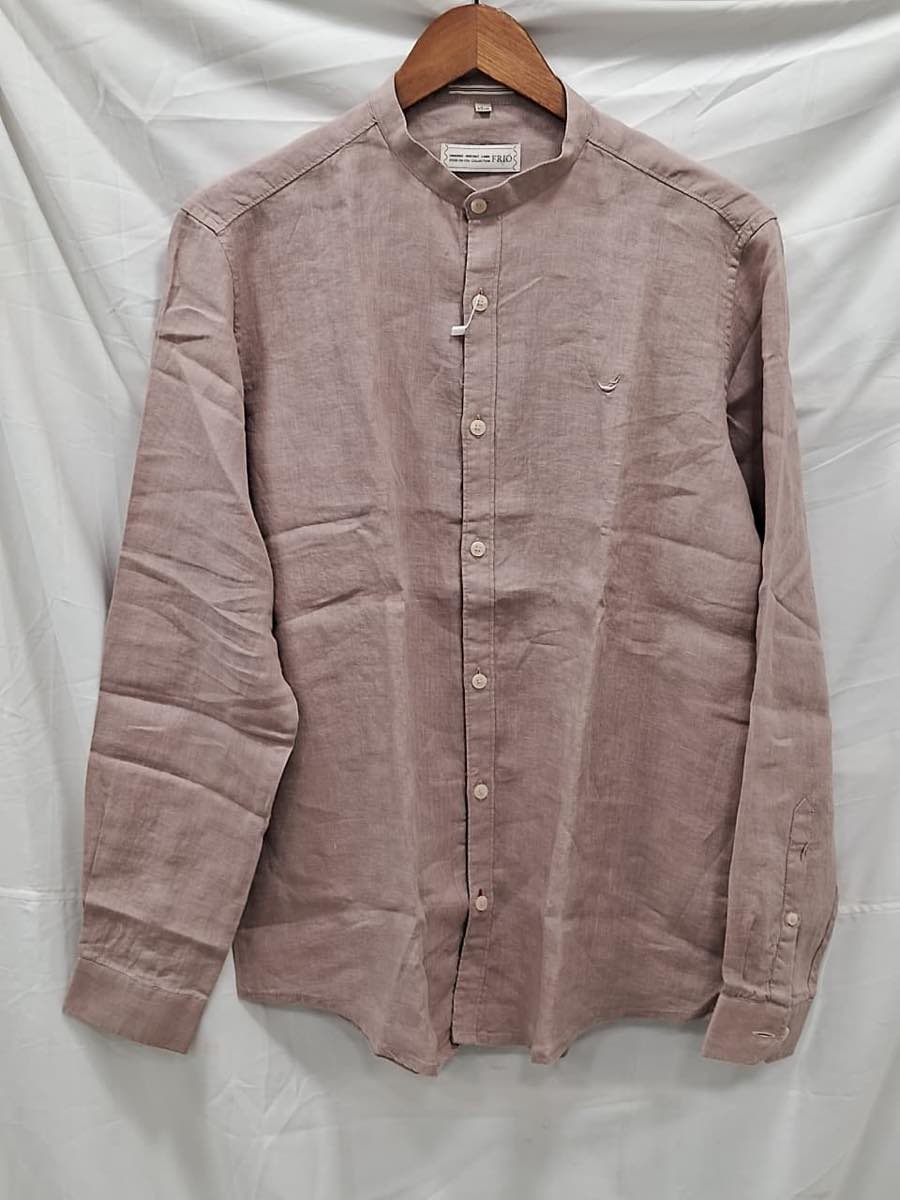
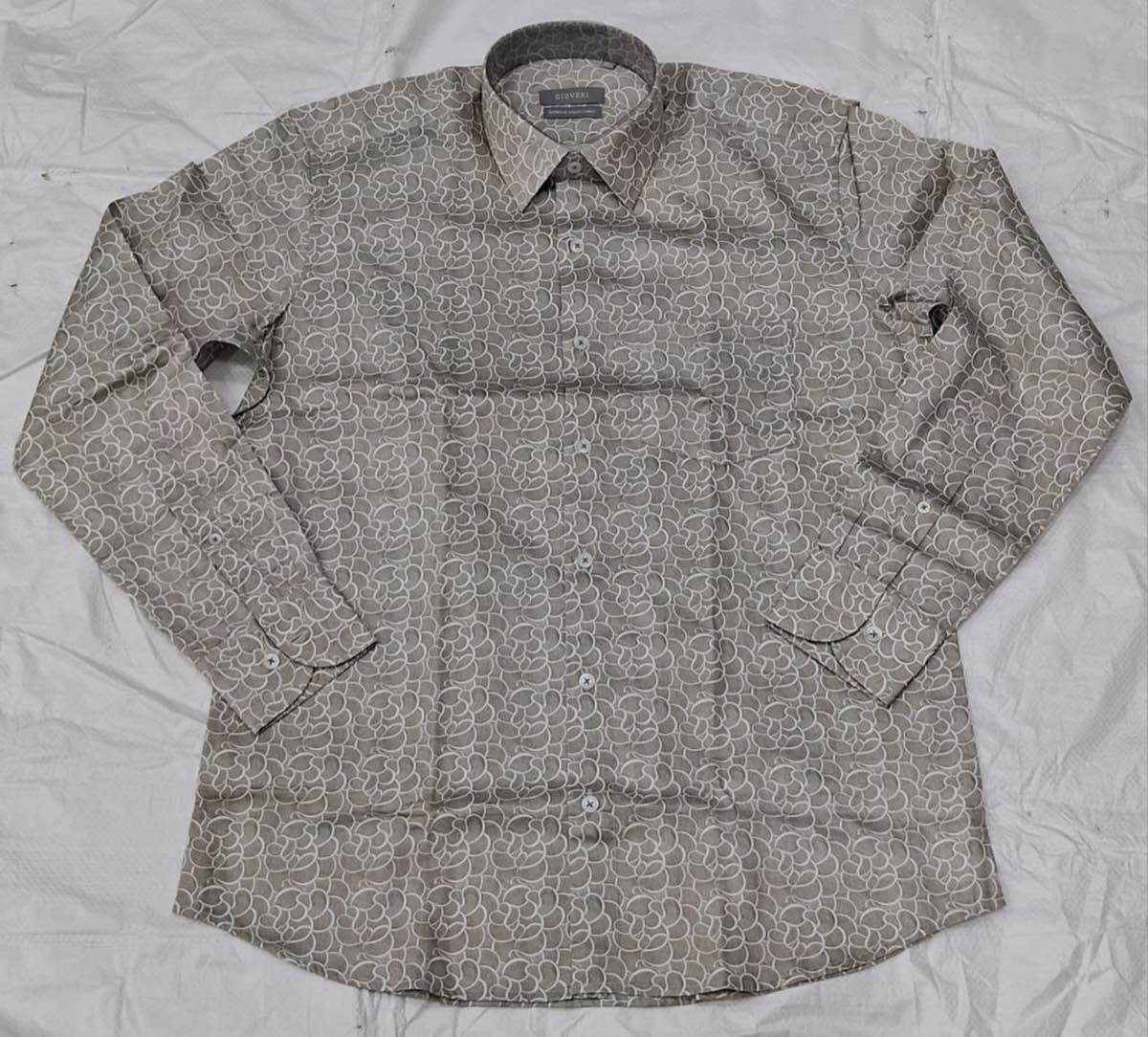
Texture is pattern made by the weave or the yarn rather than by print. It adds depth up close while reading almost plain from across a room — a useful way to bring interest to a formal wardrobe without loud colour.
- Dobby
- Small geometric figures — dots, diamonds, fine ribs — woven into the cloth on a special loom attachment. Formal and subtle.
- Herringbone
- A twill that reverses direction in bands, making a fine zigzag. Rich texture that still reads as a solid.
- Slub
- Yarn with deliberate thick and thin places, giving an irregular, natural look associated with linen and linen-look cloths.
- End-on-end
- Alternating coloured and white yarns that create a fine, almost misty texture — a softer alternative to a solid.
- Seersucker
- Puckered stripes that hold the cloth slightly away from the skin — a traditional hot-weather choice, firmly casual.
- Royal oxford
- A finer, more pronounced basket structure than standard oxford, with a slight lustre — a dressier member of the oxford family.
Room 2 — Behaviour
Six measures
of cloth
When you hold a shirt in a shop, these are the qualities worth noticing. None of them needs a specification sheet — your hands and eyes will tell you most of it.
-
Weight
How heavy the cloth is for its size. Lighter shirtings feel cool and fluid; heavier ones feel substantial and hold their shape. For warm climates, lighter is usually more comfortable.
In the hand Hold the shirt up to the light: lighter cloths let more through.
-
Weave
The pattern of interlacing — plain, basket or twill — which sets the surface and much of the behaviour. Tighter weaves look smoother and dressier.
In the hand Look closely at the surface: flat, grainy or diagonal?
-
Texture
The visible and tactile surface. Smooth cloths read formal; textured ones add depth and lean more relaxed.
In the hand Run a fingertip across the cloth — smooth or ridged?
-
Drape
How the fabric falls and moves. Good drape follows the body without clinging; stiffer cloths stand away from it.
In the hand Let a sleeve hang from your hand and watch how it falls.
-
Breathability
How easily air and moisture pass through. Natural fibres and more open weaves generally breathe better — important in humid heat.
In the hand Breathe through a single layer: it should feel easy.
-
Wrinkle behaviour
How readily the cloth creases and how quickly creases relax. Twills and blends often resist creasing better than fine plain-weave cottons.
In the hand Crush a corner in your fist for a few seconds, then let go.
Room 3 — Comparison
The fabric matrix
General tendencies Positions are qualitative and comparative, not measurements. Individual cloths vary with yarn, finish and weight.
| Exhibit | SmoothTextured | CrispSoft | FormalRelaxed |
|---|---|---|---|
| F/02Poplin | Leans smooth | Leans crisp | Leans formal |
| F/03Oxford | Leans textured | Between the two | Leans relaxed |
| F/04Twill | Between the two | Between the two | Leans formal |
| F/05Cotton blends | Leans smooth | Between the two | Between the two |
| F/06Textured / linen-look | Leans textured | Between the two | Leans relaxed |
| F/04Denim | Leans textured | Between the two | Leans relaxed |
Room 4 — Climate
Dressing for the season
Mumbai asks a lot of a shirt. For much of the year the air is warm and humid; the monsoon brings rain, damp commutes and sudden changes between wet streets and cold, air-conditioned offices. Fabric choice makes a noticeable difference.
Heat and humidity
Look for lighter weights and open, breathable weaves: fine cotton poplin, lighter twills and linen or linen-look cloths. Paler colours tend to feel cooler in direct sun. A shirt that sits slightly away from the body — a regular rather than a very close fit — lets air circulate; see regular fit formal shirts.
Monsoon
Quick-drying, easy-care cloths earn their place: cotton blends and lighter cottons dry faster than heavy ones. Darker colours and small patterns are more forgiving of splashes. Keep a fresh shirt at the office if your commute is long, and let damp shirts dry fully before they go back in the cupboard.
Air-conditioned interiors & cooler months
Medium-weight twills and oxfords feel comfortable in cold meeting rooms and on cooler evenings, and pair naturally with a blazer.
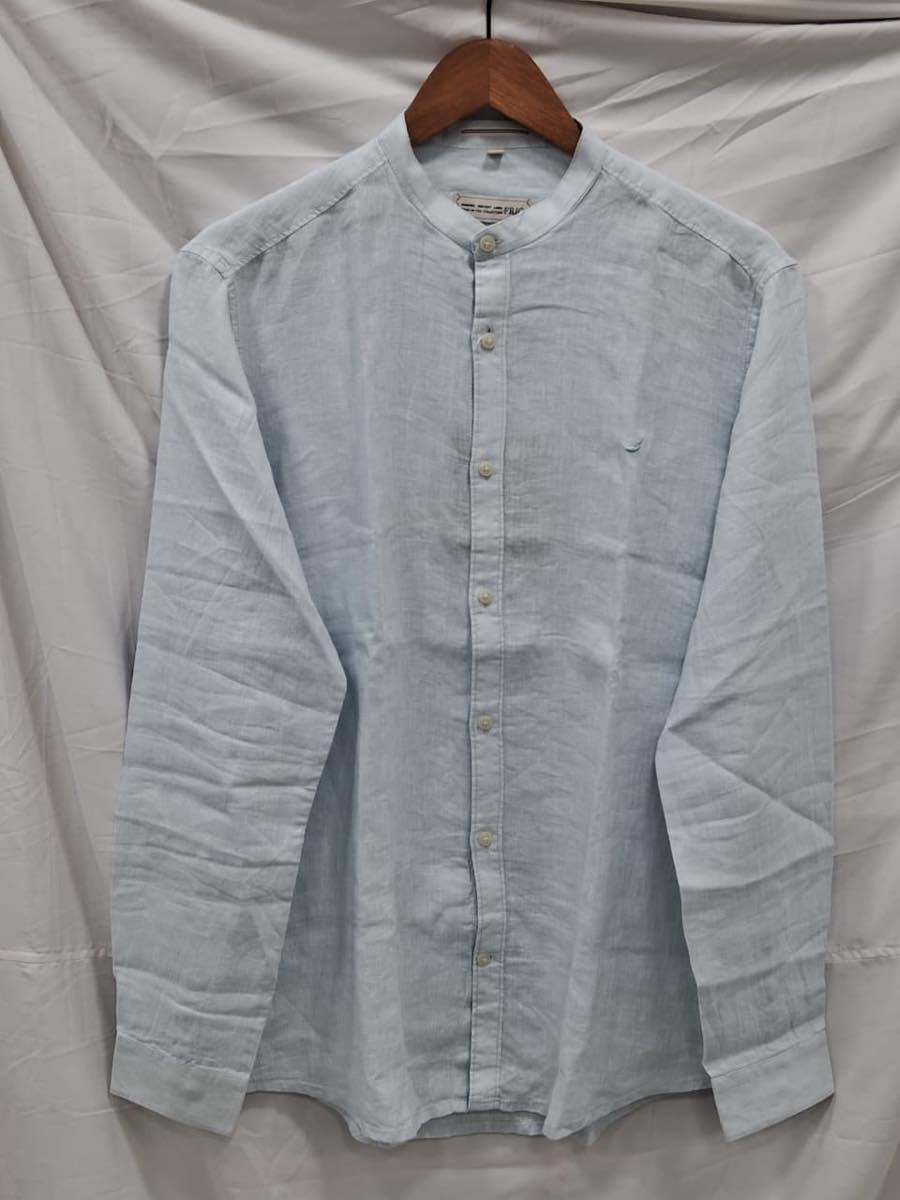
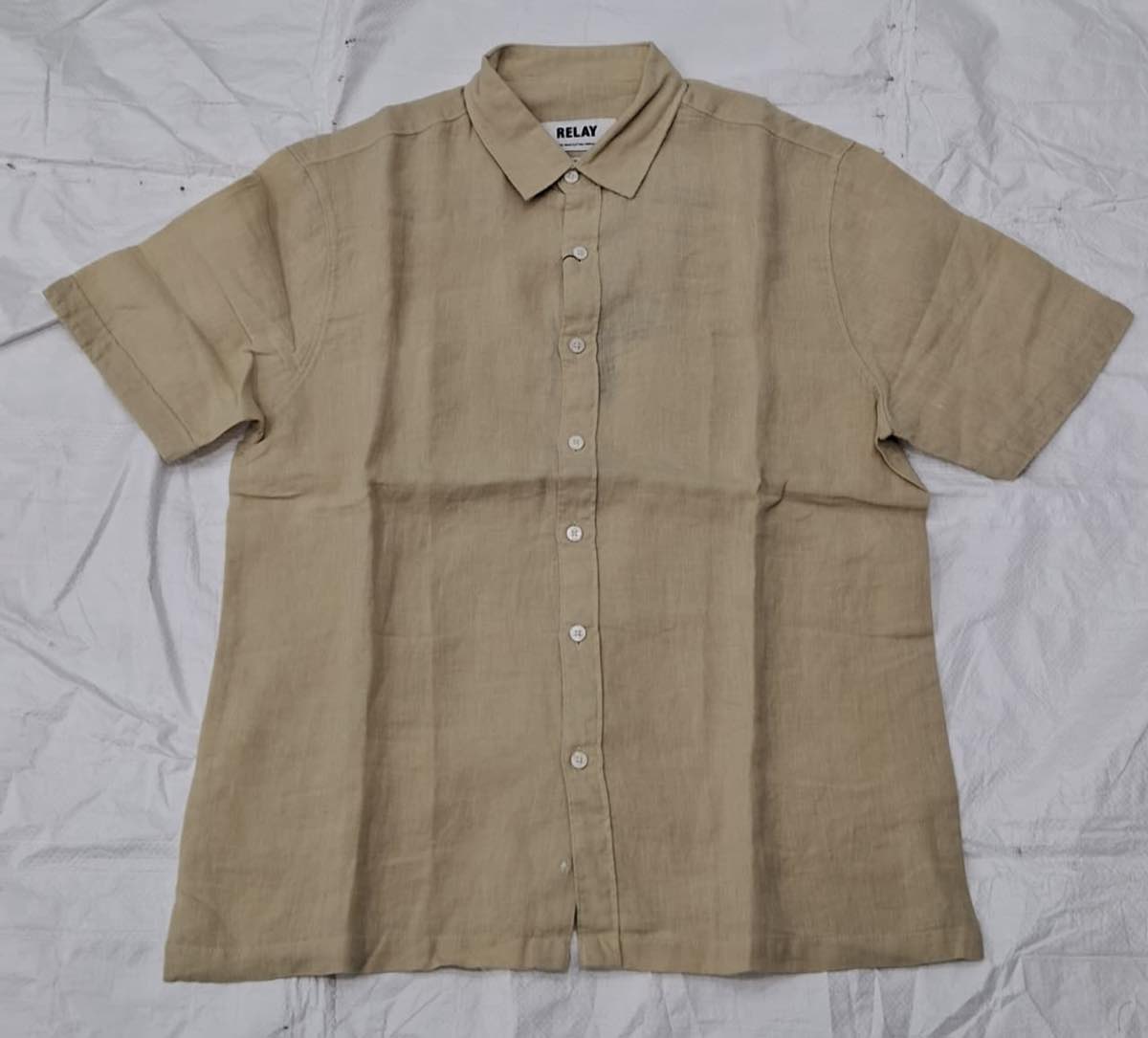
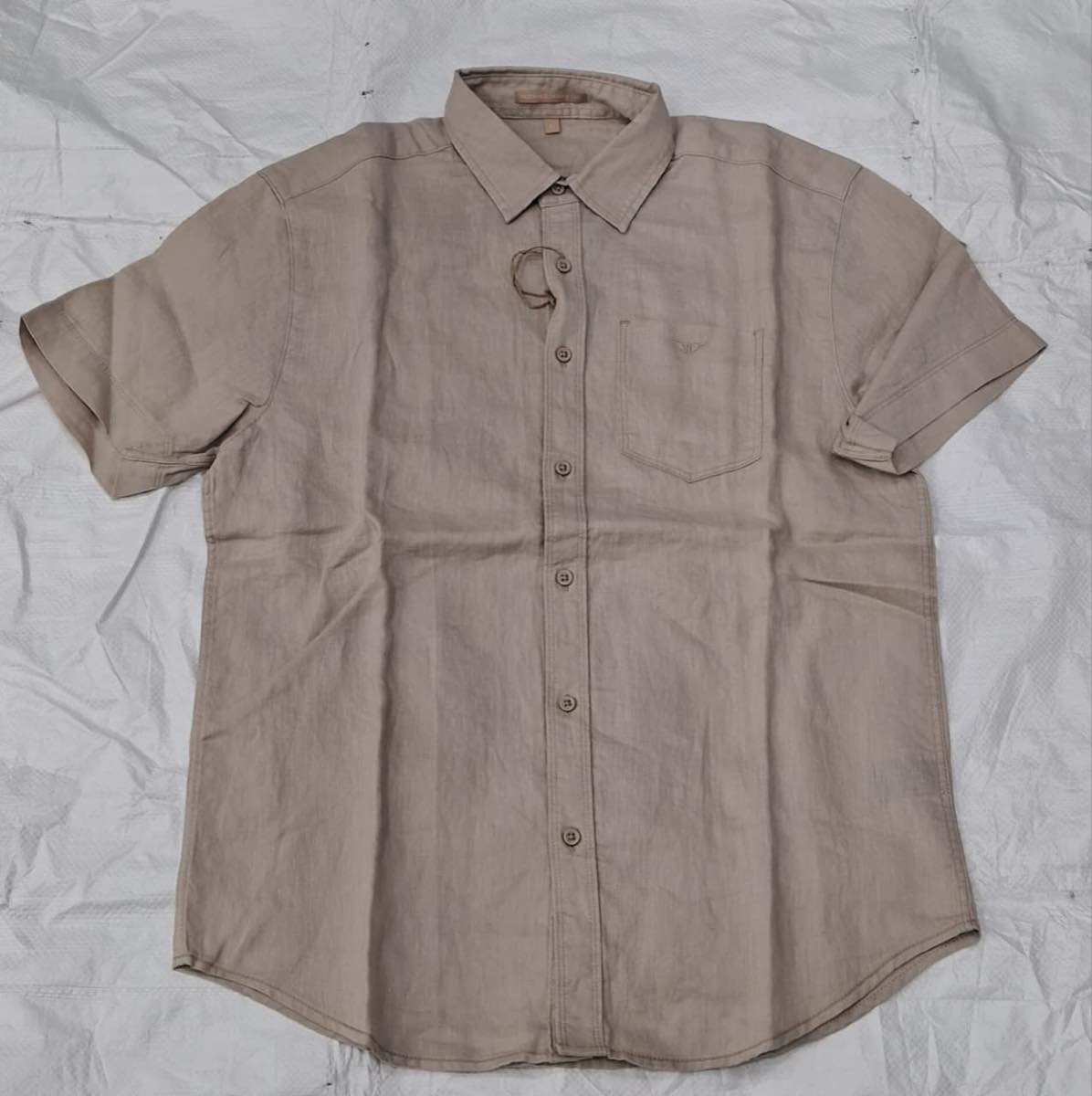
Exhibit F/07 — Conservation
Fabric care
Good care keeps a shirt looking sharp for longer. Always follow the garment's own care label first; these are general habits that suit most cotton formal shirts.
Wash cool, inside out
Cool or warm rather than hot water is kinder to colour and fibre. Turning shirts inside out reduces surface wear. Fasten the buttons loosely and take out removable collar stays first.
Pre-treat collars and cuffs
Collars and cuffs collect the most wear. A gentle pre-treatment before washing does more than a hotter wash.
Dry with care
Shake the shirt out and hang it on a shaped hanger to dry; high dryer heat is a common cause of shrinkage. In the monsoon, dry indoors with good air flow so shirts dry fully.
Iron while slightly damp
Cotton presses most easily when a little damp. Work collar, cuffs and yoke first, then sleeves, then the body. Use a lower setting for blends.
Hang, don't cram
Store shirts on hangers with space between them, buttoned at the top so collars keep their shape. In humid months, a dry, ventilated cupboard helps prevent mustiness.
Rotate your shirts
Giving each shirt a rest between wears lets the cloth recover and spreads wear across your wardrobe.
Further
reading
- Essay 07The difference between poplin, oxford and twill
- Essay 14Understanding shirt construction and details
- Nº 04Collar & Cuff Studio — formal shirt collar styles
- Nº 06Colours & Patterns — texture's close cousin
- Nº 07A capsule of office wear shirts for the working week
- Essay 10How to build a versatile office shirt wardrobe
The best way to understand cloth is to touch it. Ask the team at Options Mall, Vile Parle West, about current fabrics and styles — call +91 8369381345 or see contact and directions.