How to Build a Versatile Office Shirt Wardrobe
A good office wardrobe is not a large one. It is a small, well-chosen set of shirts that combine freely, cover every kind of working day and never leave you guessing in the morning.
Options Mall Menswear Journal — Mumbai
Many men own plenty of shirts and still feel they have nothing to wear on a Monday. The problem is rarely quantity. It is that the shirts were bought one at a time, for different reasons, and never designed to work together. A versatile office shirt wardrobe reverses that. It starts from the working week you actually live — the meetings, the commute, the climate, the dress code — and builds outward from a small core of shirts that all combine with the same trousers, jackets and ties. This essay sets out how to plan that wardrobe in layers, what each layer should contain and how to keep it working over time.
Start with the week you actually have
Before thinking about colours, think about occasions. How many days a week do you wear a jacket? How often do you wear a tie? Are there client-facing days and internal days? Is Friday relaxed? A lawyer in court most mornings needs a different balance from a consultant who visits clients twice a week, and both need something different from a manager in a creative office.
Write down a typical fortnight and note the level of formality each day asks for. The result is the brief for your wardrobe. The everyday business wardrobe and meeting-day sections on our business wardrobe page describe these occasions in more detail.
The core: five shirts that do most of the work
The centre of any professional wardrobe is a handful of solid and near-solid shirts in the most adaptable colours. A sensible core looks like this:
- Two white shirts — one in smooth poplin for formal days, one in a slightly textured cloth such as fine twill or oxford for everyday wear.
- Two light blue shirts — the most versatile colour in menswear, flattering on most skin tones and easy with navy, grey and brown.
- One fine stripe or very small check in blue — quiet enough to behave like a solid, with a little more character.
These five shirts combine with every common trouser and jacket colour, take any sensible tie, and cover formal and informal office days alike. If you are unsure where to begin, read white shirts as a foundation of formal dressing and blue formal shirts and their styling possibilities.
Build the core so well that you could wear it for a fortnight without anyone noticing a repeat — and without you ever having to think.
The second layer: colour and pattern
Once the core is in place, add three to five shirts that bring variety without breaking the system. Pale pink, lavender and soft grey all sit well with navy and charcoal. A Bengal stripe, a pencil stripe and a small gingham add pattern at office-appropriate scales. Each new shirt should pass a simple test: does it work with at least two of the trousers and one of the jackets you already own?
The colour guide explains which shades suit which complexions, and our comparison of striped versus checked formal shirts helps decide which patterns to add first.
Fit, collar and fabric: keep them consistent
A wardrobe feels coherent when the shirts share a common shape. Once you find the fit that suits your build — whether a slim fit, regular fit or something in between — buy most of your office shirts in that cut. The same applies to collars. A semi-spread or spread collar works with and without a tie and under most jackets; the collar studio explains the alternatives.
Fabric for the climate
In a warm, humid city, breathable cotton formal shirts are the practical backbone. Poplin feels cool and crisp; oxford and twill are slightly heavier but hold their shape and resist creasing. A few cotton blends can help on travel days when ironing is not an option.
Aim for roughly one shirt per working day plus two or three spares. That allows each shirt to rest between wears and gives you room to replace them gradually rather than all at once.
The outer ring: relaxed and off-duty shirts
Every wardrobe also has an outer ring of shirts that are not for the office at all, and it helps to recognise them as such. Short-sleeve shirts, embroidered shirts and bold prints have their own place, and treating them as a separate group keeps the working wardrobe focused.
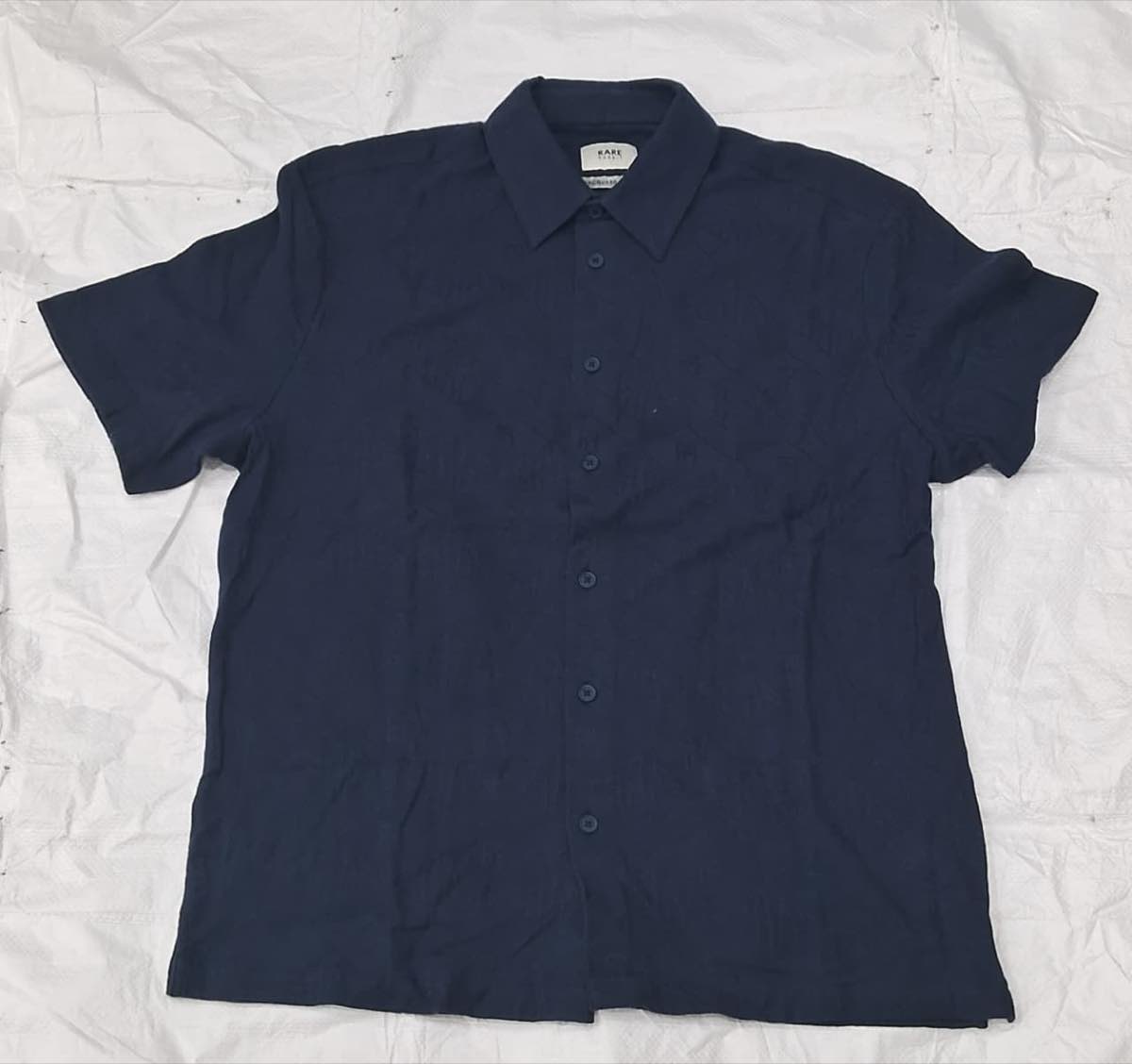
The navy short-sleeve shirt on the cover is a good example. It is a clean, useful piece for warm weekends, travel and casual plans, worn untucked with chinos or tailored shorts. It is not a substitute for a long-sleeve shirt under a jacket or with a tie, where a short sleeve looks out of proportion.
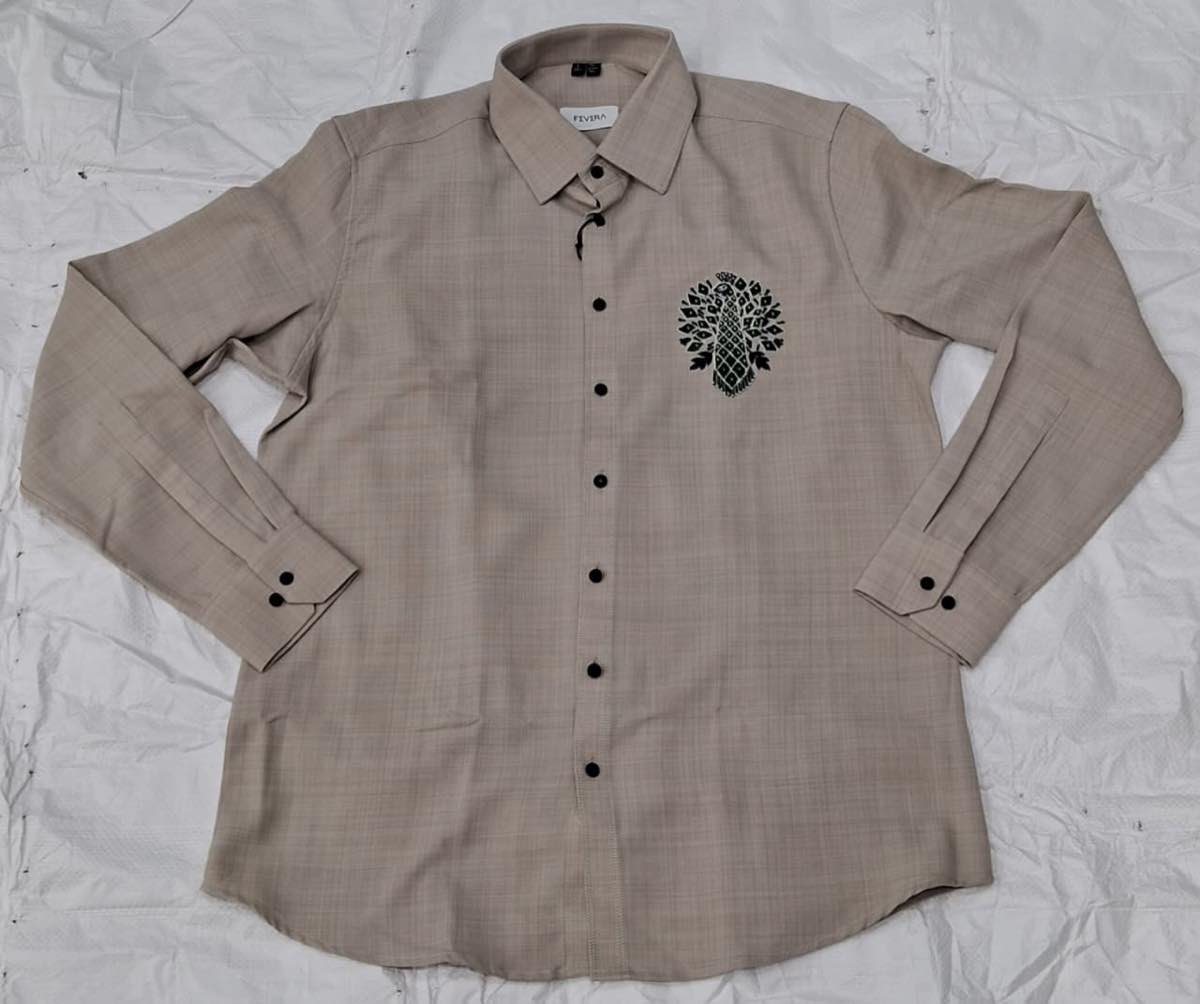
Decorative shirts like this embroidered beige one are equally welcome, simply for different occasions: dinners, weekends and social events where a little personality is the point. Keeping them in a separate part of the wardrobe stops them from being worn on the wrong day by default.
A sample weekly rotation
Here is how a core-plus-second-layer wardrobe might run across a five-day week with two trouser colours and one navy jacket:
- Monday: white poplin, charcoal trousers, navy jacket and tie — a strong, formal start.
- Tuesday: light blue, navy trousers, no jacket — the everyday office standard.
- Wednesday: fine blue stripe, charcoal trousers, jacket for the afternoon meeting.
- Thursday: pale pink, navy trousers — a softer colour, still entirely professional.
- Friday: small check, navy chinos, collar open.
For the principles behind these pairings, see how to coordinate formal shirts with trousers and the blazer section of the styling guide.
Care and renewal
A versatile wardrobe stays versatile only if it is maintained. Rotate shirts rather than favouring two or three, wash collars and cuffs promptly, and hang shirts on shaped hangers. The fabric care notes cover washing and ironing. When a white shirt yellows at the collar or a cuff begins to fray, replace that single shirt in the same role so the system stays complete.
The wardrobe as a system
The most useful office shirt wardrobe is designed rather than accumulated: a dependable core of whites and blues, a second layer of gentle colour and fine pattern, a consistent fit and collar, and an outer ring of relaxed shirts kept for the days they suit. Build it in that order and every new shirt multiplies your options instead of adding to the clutter.
If you would like help planning the next additions, visit Options Mall in Vile Parle West or call +91 8369381345 to see current formal shirt styles. You will find directions on the contact page.