Plate set A–C / Collar · Cuff · Construction
The details that define the shirt. Formal shirt collar styles, cuffs & construction
Two shirts can share a colour, a cloth and a fit and still say entirely different things. The difference is in the details: the angle of a collar point, the depth of a cuff, the line of stitching down the front.
This studio studies those details the way a design publication studies a garment — drawn, labelled and explained — so you can recognise them on the rail and choose them with intent.
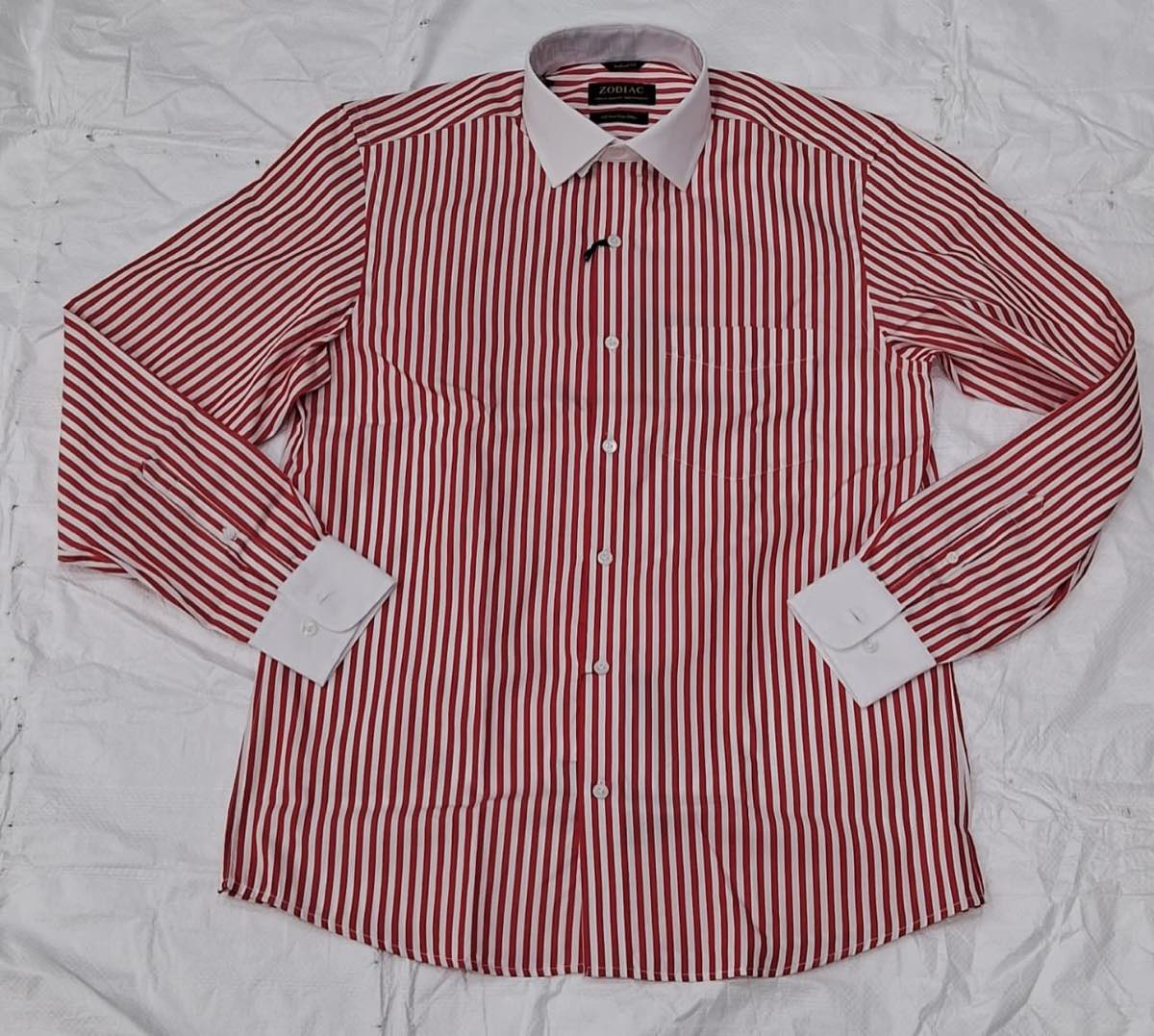
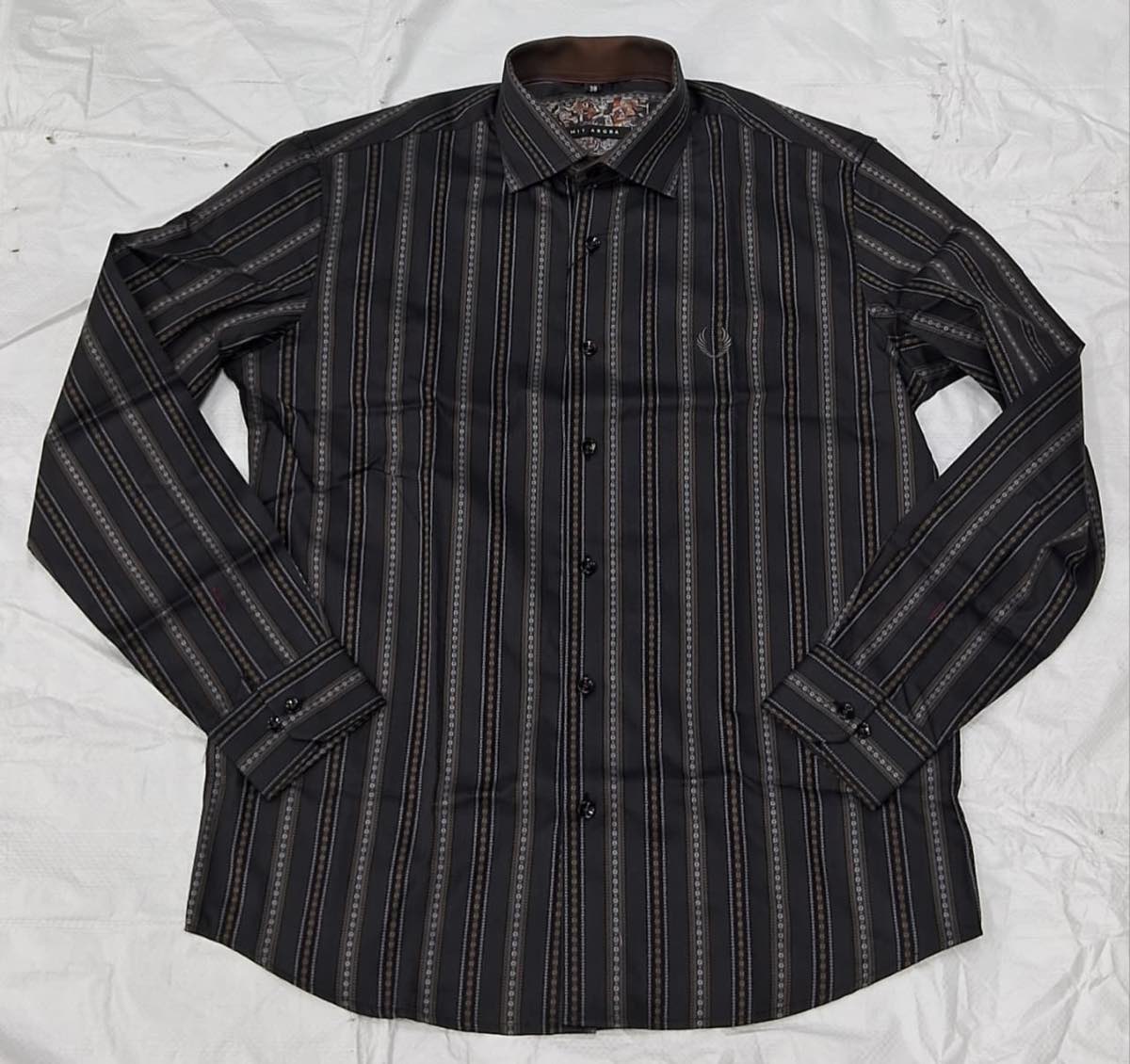
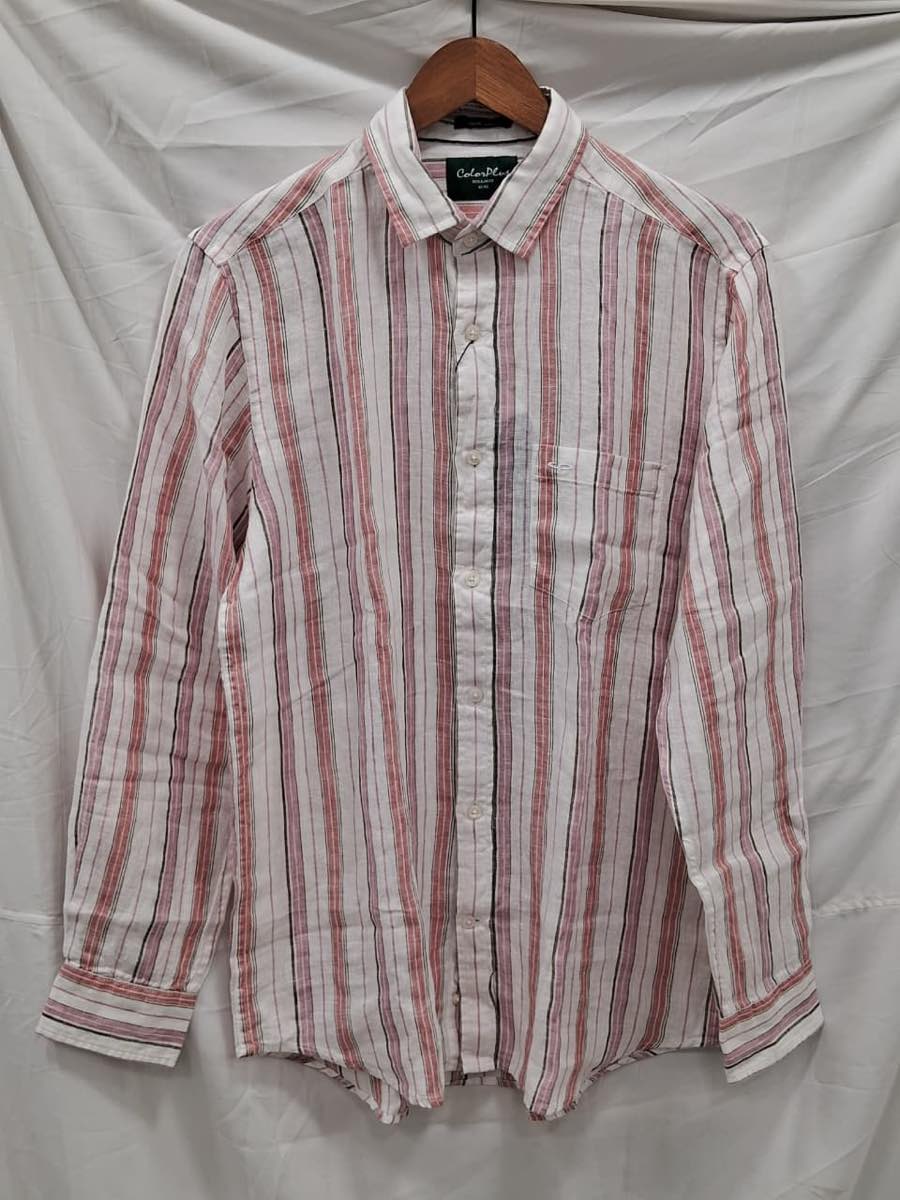
- 1 White contrast collar against a red stripe
- 2 Chest pocket, cut to match the stripe
- 3 Front placket and button line
- 4 White contrast cuff, buttoned barrel style
Plate set A — Collars
Formal shirt collar styles, drawn
The collar is the part of a shirt seen first and seen closest to the face. What separates one style from another is mostly geometry: how far apart the points sit (the spread), how long they run, and whether anything holds them down. Each specimen below is drawn from the front with the spread marked, and paired with the tie knot it tends to suit.
-
C/01COL.PNT
Point collar
NarrowWideLong points set close together, with only a narrow gap between them. It draws a strong vertical line from the chin downward and is one of the most traditional collars in business dress.
- Tie knot
- A small, neat knot such as the four-in-hand. A bulky knot pushes the points apart.
- Face & neck
- Helps balance rounder or broader faces by adding length.
- Wear it for
- Conservative offices, slim ties, classic suits.
-
C/02COL.CLS
Classic collar
NarrowWideModerate points and standard proportions — the collar most people picture when they think of a formal shirt. Neither narrow nor wide, it rarely looks wrong.
- Tie knot
- Four-in-hand or a half-Windsor in a medium-width tie.
- Face & neck
- A safe choice for most face shapes and neck lengths.
- Wear it for
- Everyday office wear, interviews, with or without a tie.
-
C/03COL.SSP
Semi-spread collar
NarrowWideThe middle ground between a point and a spread collar. The points angle gently outward, leaving enough room for most knots while still looking tidy when worn open.
- Tie knot
- Half-Windsor is the natural partner; a four-in-hand also works.
- Face & neck
- Versatile across face shapes — the most forgiving collar here.
- Wear it for
- Business formal shirts for the working week, suits and blazers.
-
C/04COL.SPR
Spread collar
NarrowWidePoints angled well apart, opening up the space around the knot. It looks confident and contemporary, and frames the face more widely than a point collar.
- Tie knot
- Fuller knots — half-Windsor or Windsor — fill the space neatly.
- Face & neck
- Adds width to longer, narrower faces.
- Wear it for
- Meetings, suits, formal occasions and client-facing days.
-
C/05COL.CUT
Cutaway collar
NarrowWideThe widest spread of all, with points swept back towards the shoulders. A bold, fashion-forward frame that looks deliberate with a tie and striking without one.
- Tie knot
- A substantial knot, such as a Windsor — or no tie at all.
- Face & neck
- Best on slimmer or longer faces; can broaden a round face.
- Wear it for
- Contemporary tailoring, evening wear, statement looks.
-
C/06COL.BTD
Button-down collar
NarrowWidePoints fastened to the shirt front with small buttons, so the collar keeps a soft roll and stays in place when worn open. Born of practicality, it reads relaxed.
- Tie knot
- Happiest without a tie; if you wear one, keep the knot small.
- Face & neck
- The soft roll suits most faces; scale is usually moderate.
- Wear it for
- Smart-casual days, oxford cloth, blazers and chinos.
Collars in the photograph — four studies
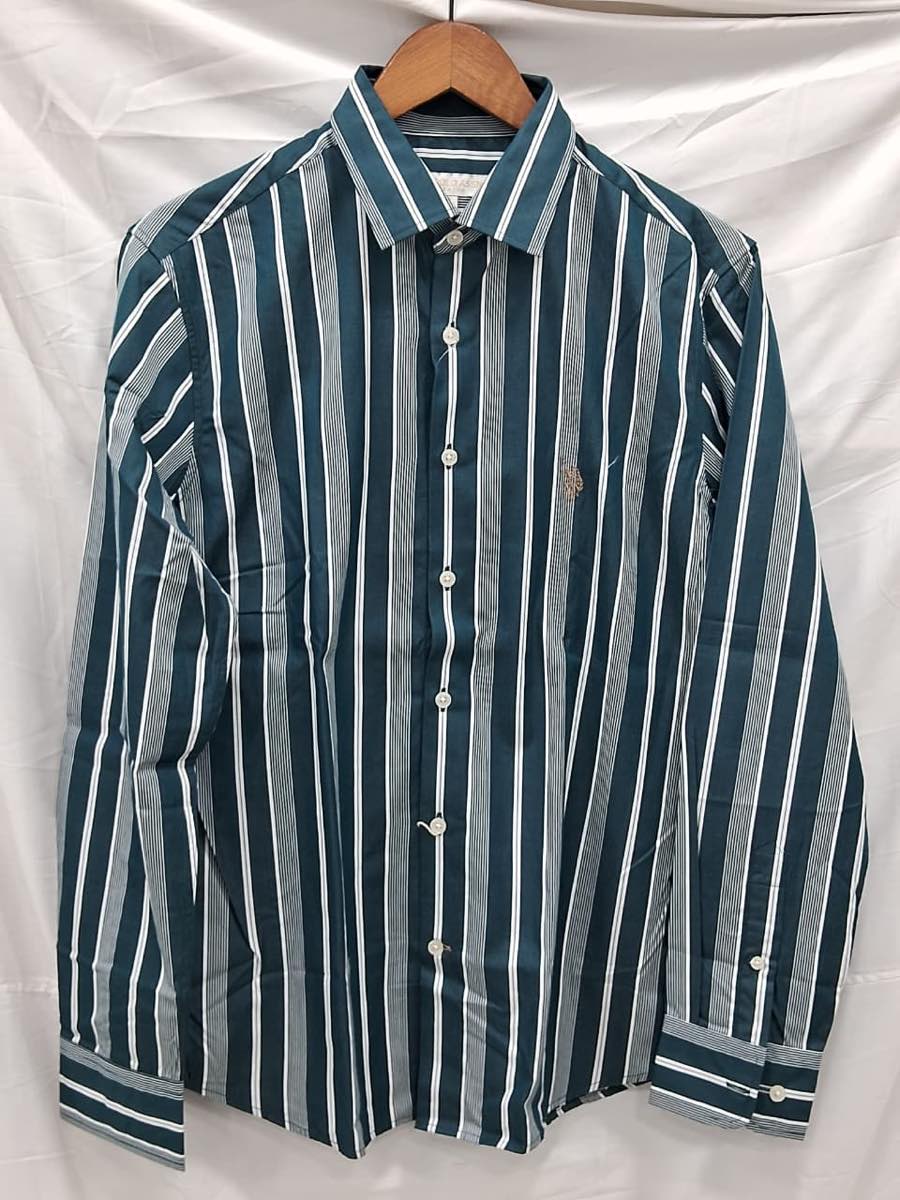
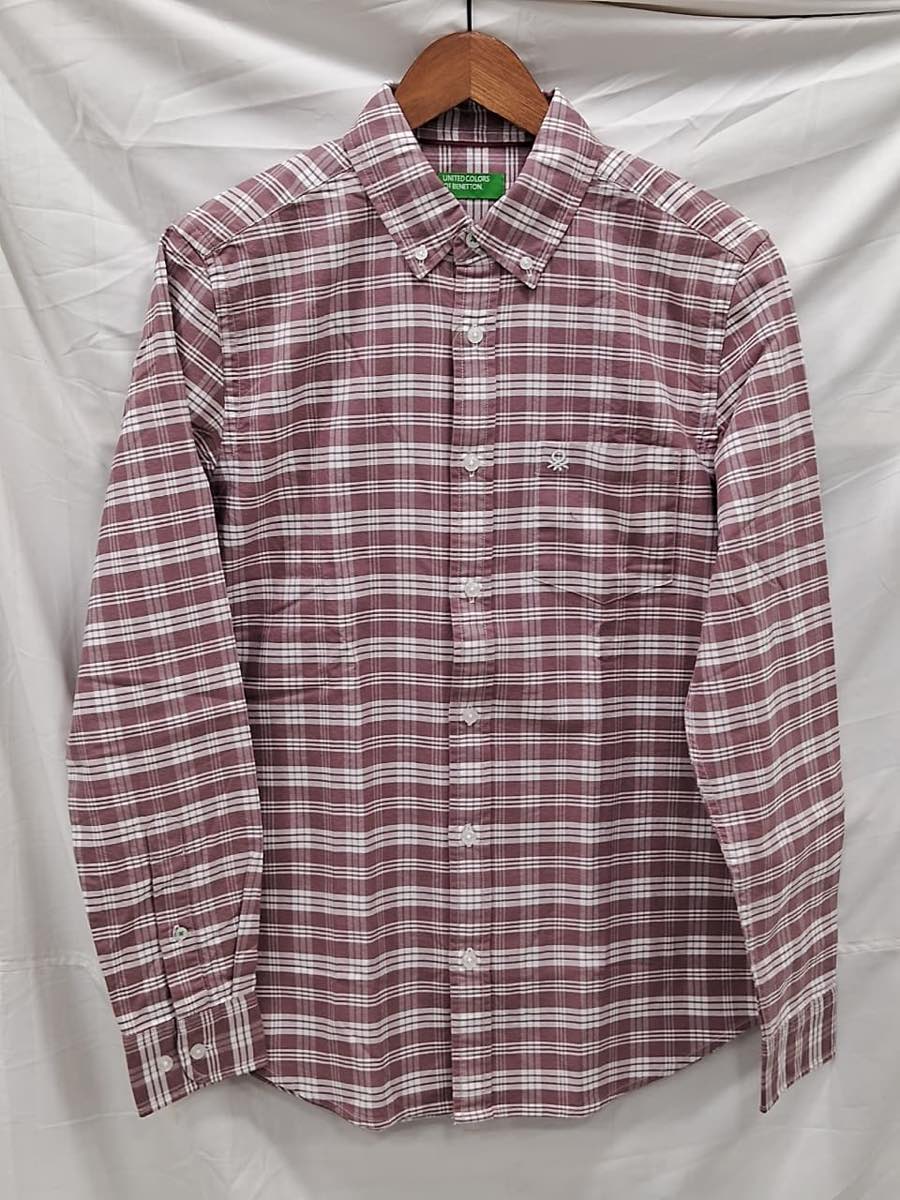
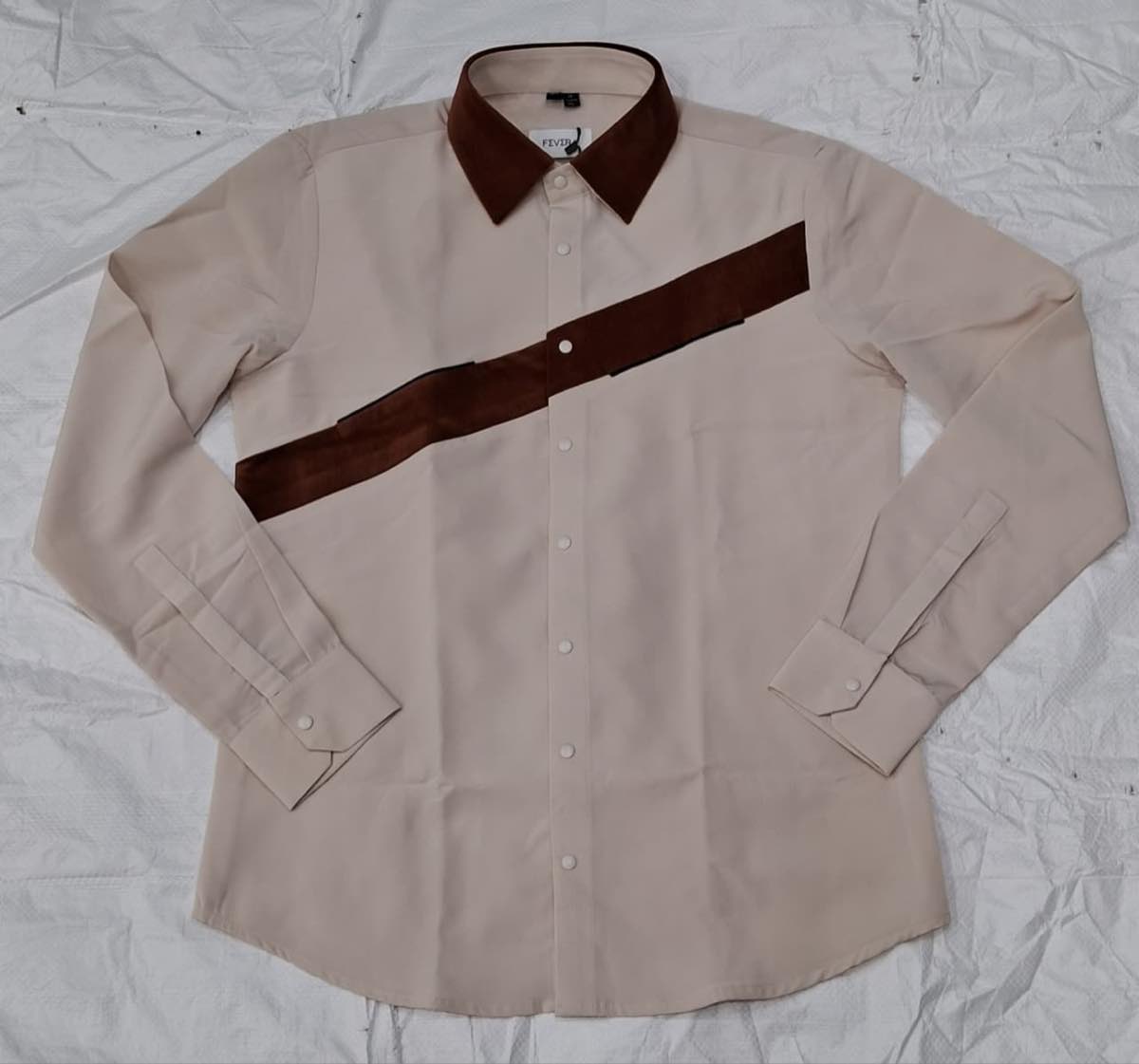
Choosing a collar for your face, neck and tie
These are balancing principles, not rules. A good collar adds what the face or the outfit is missing.
- Longer, narrower face
- Spread and semi-spread collars add width and stop the face looking drawn. Very long points tend to exaggerate length.
- Rounder, broader face
- Point and classic collars introduce a vertical line that lengthens. A very wide cutaway can make a round face look broader.
- Longer neck
- A slightly taller collar band sits higher and frames the neck. A cutaway or spread also fills the space well.
- Shorter or fuller neck
- A lower band and a collar worn open, or a semi-spread with a modest knot, keep the area around the throat uncluttered.
- Slim tie, small knot
- Point or classic collar. A small knot in a wide spread leaves an obvious gap.
- Wider tie, fuller knot
- Spread or cutaway. A fuller knot such as a half-Windsor or Windsor fills the space the points leave open.
Essay 05 — How to choose the right shirt collar Ties and formal shirts in the Styling Guide
Plate set B — Cuffs
The cuff: a last word at the wrist
A cuff is seen whenever you reach for a pen, shake a hand or lift a cup. Its depth, its corners and the way it fastens decide how formal the sleeve looks. Five specimens, drawn in side elevation unless marked.
-
B/01CUF.BRL
Side elevation + corner shapes: square, rounded, angled
Barrel cuff
The standard shirt cuff: a single band that wraps the wrist and fastens with buttons. Corners may be square, rounded or angled (sometimes called mitred); rounded and angled corners look slightly softer and more modern.
Styling The everyday office cuff — works with or without a jacket, and with a watch.
-
B/02CUF.1BT / 2BT
Side elevation — two-button version
Button cuffs: single & two-button
Barrel cuffs are described by their buttons. A single-button cuff is the most common. A two-button cuff is usually a little deeper, with both buttons placed one above the other and fastened together, giving a longer, more tailored look at the wrist.
Styling Single for everyday; two-button where you want a touch more presence under a suit sleeve.
-
B/03CUF.ADJ
Side elevation — two buttons side by side
Adjustable cuff
Two buttons set side by side around the cuff rather than one above the other. You use one or the other to make the cuff snugger or looser — useful for slimmer wrists or for fitting a cuff over a watch.
Styling Practical rather than formal; ideal if ready-to-wear cuffs are often loose on you.
-
B/04CUF.DBL
Flat, unfolded — fold line and four buttonholes
Double cuff
A cuff cut at twice the normal depth and folded back on itself, so it sits as a doubled, stiffer band. It has buttonholes on both ends of both layers — four in all — and no buttons, because it is closed with cufflinks.
Styling Suits, ties and formal occasions. Choose plain, discreet cufflinks for business.
-
B/05CUF.FRN
Worn — folded back, fastened with a cufflink
French cuff
The same folded-back, double-length cuff under the name most widely used outside Britain. Worn, the two ends are usually brought together face to face — a “kissing” cuff — and a cufflink passes through all four buttonholes.
Styling The most formal cuff of all; it pairs naturally with a spread or semi-spread collar and a tie.
B/04 + B/05
One cuff, two names. “Double cuff” is the usual British term; “French cuff” is the name used in much of the rest of the world. Both describe the same thing: a cuff cut at twice the normal depth, folded back on itself and fastened with cufflinks rather than buttons.
Not to be confused with a convertible cuff — a single-depth button cuff that also has a second buttonhole, so it can be worn either buttoned or with cufflinks.
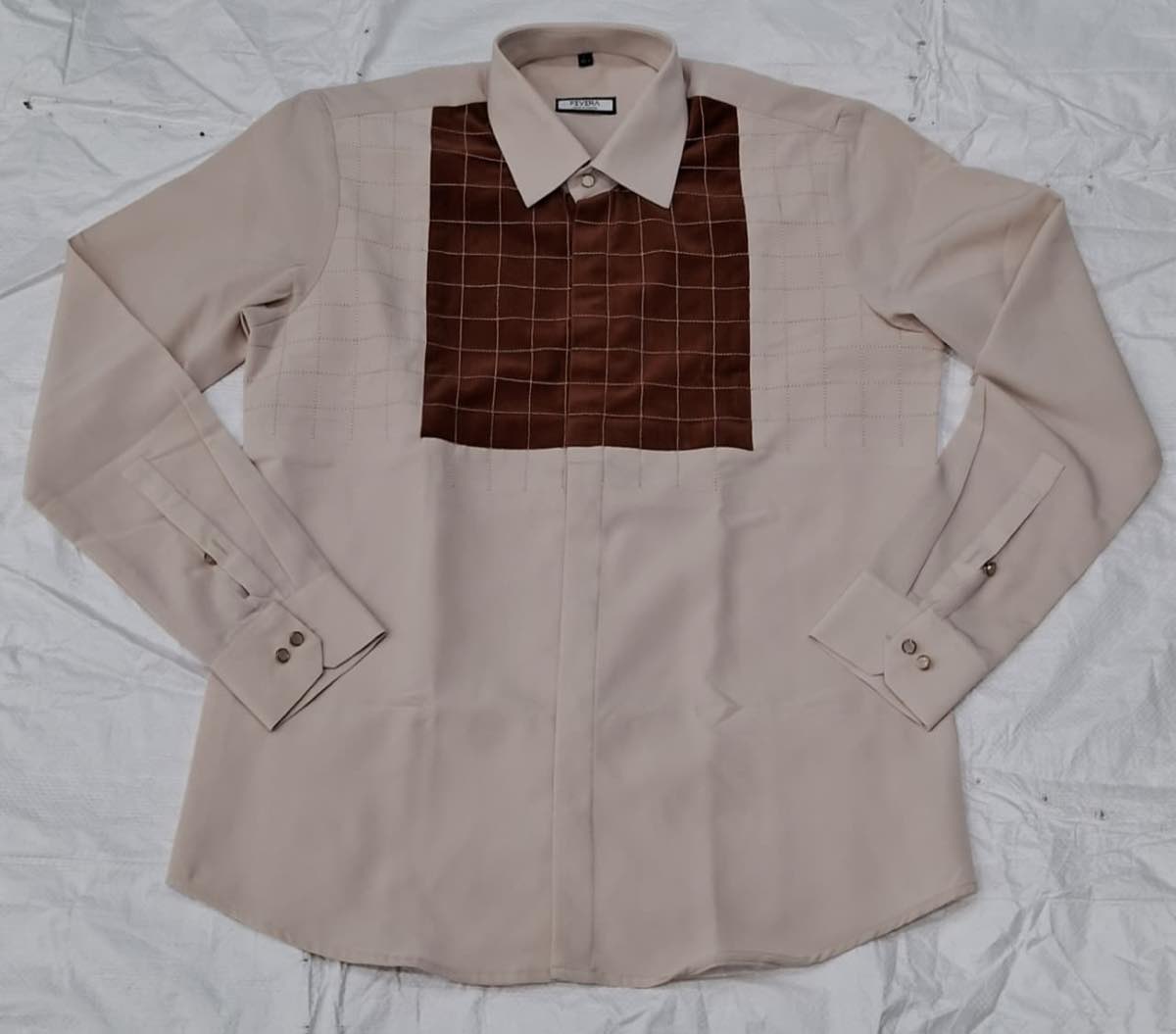
- 1–2 Deeper two-button cuffs, both buttons fastened
- 3 A contrast bib front — a decorative panel set into the shirt front
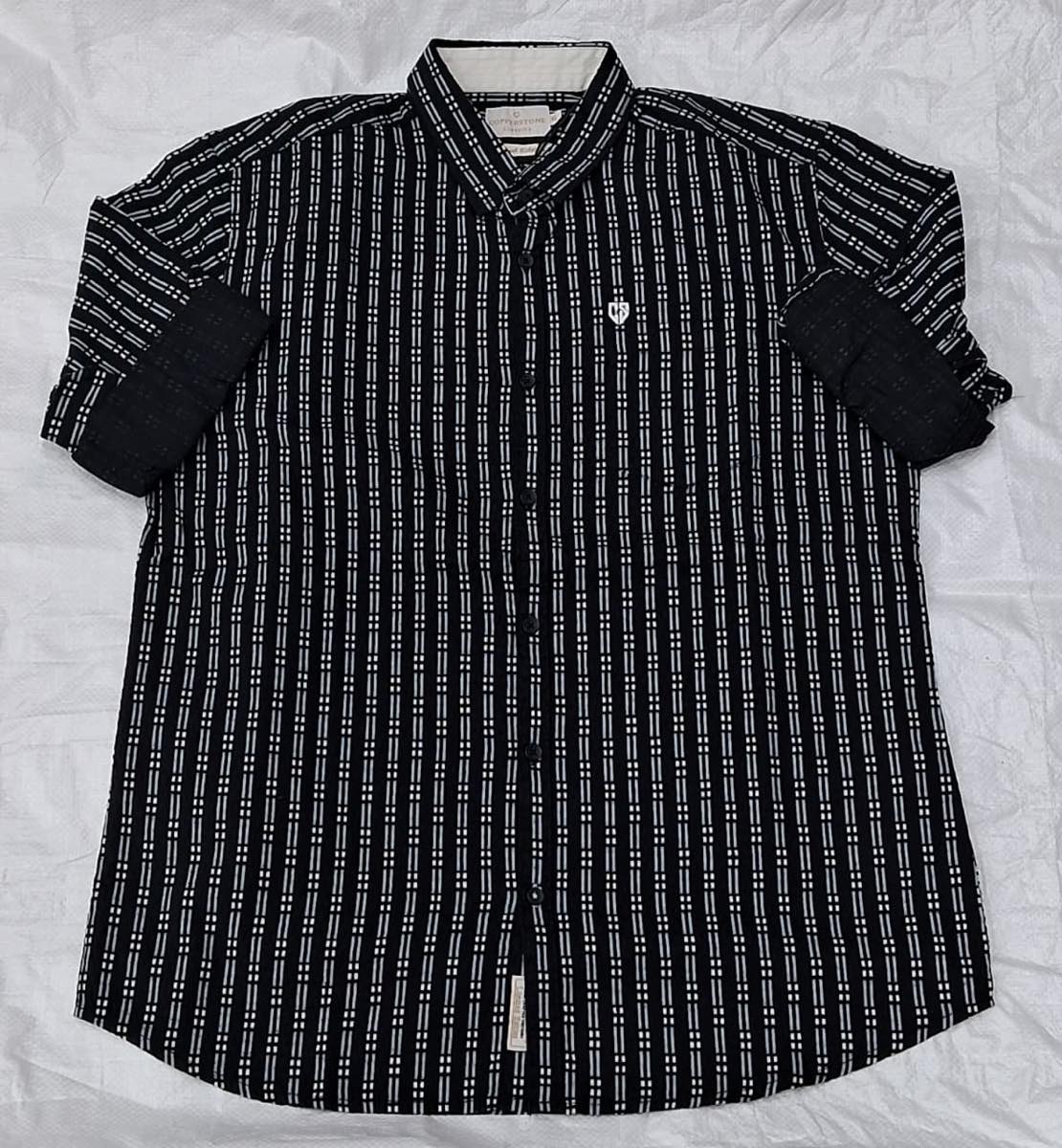
Wearing cuffs well
- Show a little linen. With a jacket on and arms relaxed, a small band of shirt cuff — around a centimetre — should be visible below the jacket sleeve.
- Mind the watch. A cuff should close comfortably over a watch, or sit just above it; an adjustable cuff makes this easy.
- Match formality. Barrel cuffs suit everyday office wear; double cuffs belong with suits, ties and occasions.
- Roll with care. Unbutton the sleeve placket as well as the cuff before rolling, so the sleeve folds flat rather than bunching.
Plate set C — Construction
Construction, read closely
Beyond collar and cuff, a shirt is a sequence of small decisions — how the front closes, where the buttons fall, whether there is a pocket, how the shoulders are pieced. None of them shout; together they decide whether a shirt looks considered.
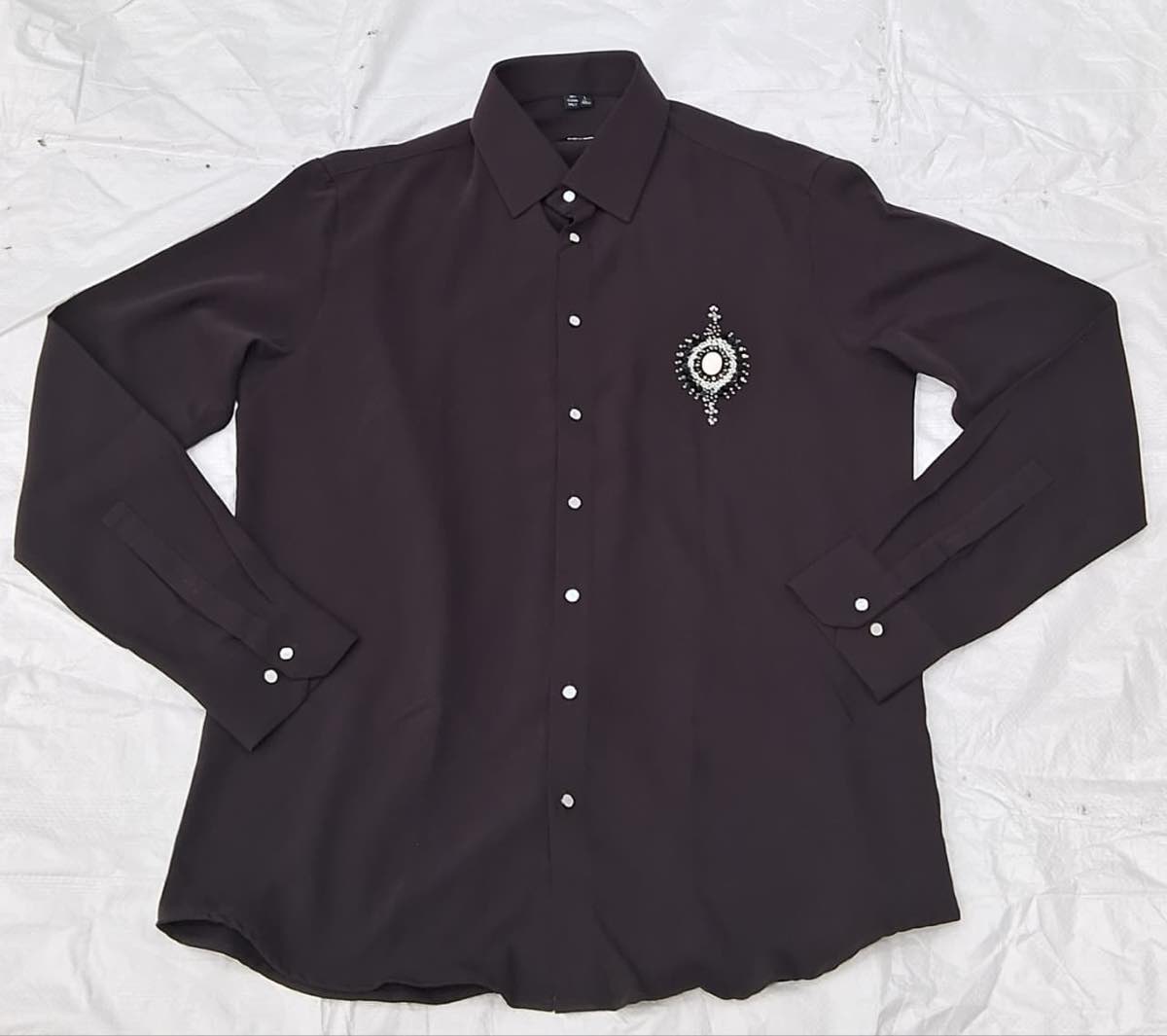
- 1
Collar & band
The band is the strip that circles the neck and carries the top button; the collar leaves are sewn to it.
- 2
Placket & button line
The front opening, with buttons spaced so the shirt does not gape across the chest.
- 3
Chest embroidery
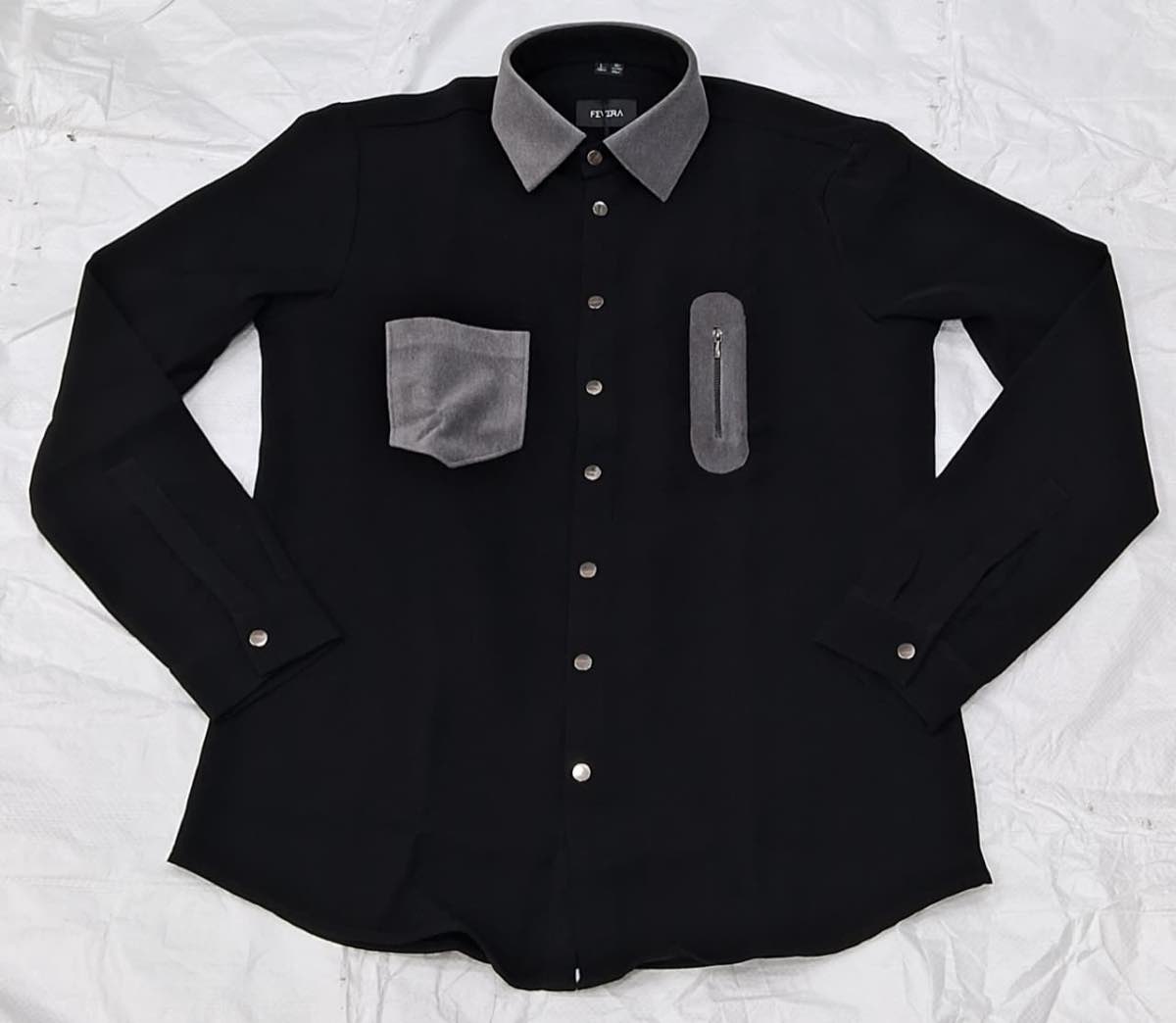
A decorative emblem in place of a pocket — a quiet signature on a dark cloth.
- 4
Barrel cuff
A button cuff with a sleeve placket above it so the hand slips through.
- 5
Curved hem
Longer at front and back than at the sides, so it stays tucked when you sit and reach.
C/01 — Placket styles, front view
Standard placket
PLK.STD
French front
PLK.FRN
Concealed placket
PLK.CON
C/02 — Yoke construction, back view
One-piece yoke
YKE.ONE
Split yoke
YKE.SPL
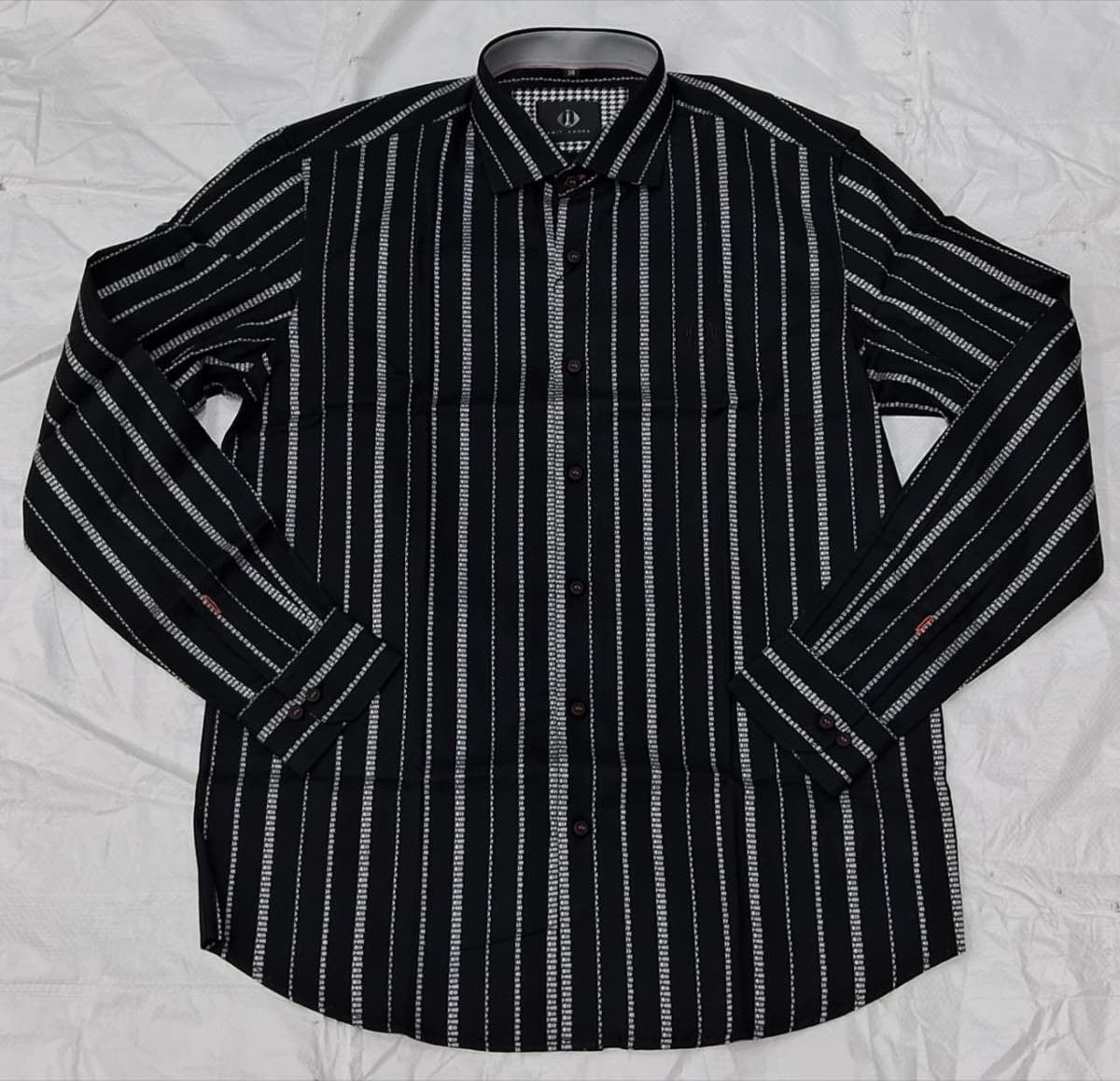
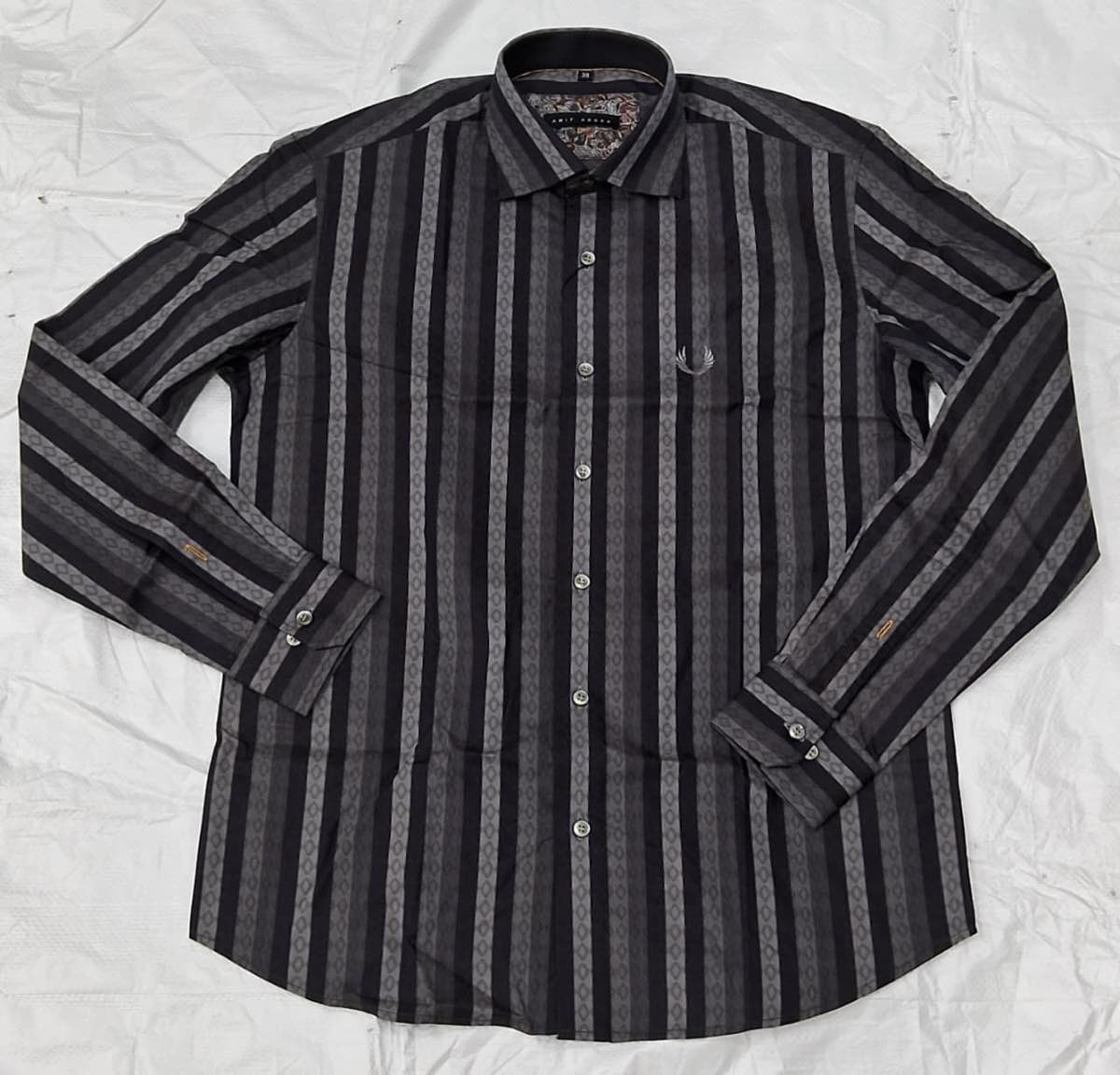
Details in the photograph
Detail glossary
PLK Plackets
- Standard placket
- Also called a front placket: a separate strip of fabric down the button side, stitched along both edges. It adds a crisp vertical line and is the most common front on formal shirts.
- French front
- Also called a plain front: no visible strip, the edge is simply folded under and stitched inside. The result is cleaner and slightly dressier.
- Concealed placket
- Also called a fly front: an extra fold of fabric hides the buttons. Minimal and sleek — often seen on evening and very formal shirts.
BTN Buttons
- Button placement
- Buttons should be spaced so the front lies flat when you sit. A button placed near the natural waist helps stop the shirt gaping when tucked.
- Collar & cuff buttons
- Usually slightly smaller than the front buttons. Button-down collars add two small ones at the points; adjustable cuffs add a spare at the wrist.
- Materials
- Shirt buttons are commonly made of plastic, shell or similar materials; thicker buttons feel more substantial and sit more securely.
PKT Pockets
- No pocket
- The cleanest and most formal option — nothing interrupts the front under a tie or jacket.
- Chest pocket
- A single patch pocket on the left breast. Practical for a pen or a card; on a pattern, the best pockets are cut so the stripe or check lines up.
- Flap & contrast pockets
- Button-flap and contrast pockets lean casual or decorative; denim and utility shirts often carry two.
YKE Yoke
- Yoke
- The panel across the back of the shoulders that joins the back to the fronts. It helps the shirt sit squarely on the shoulders.
- One-piece yoke
- Cut as a single panel. Simple, neat and the most common construction.
- Split yoke
- Two panels joined at the centre back, each cut on a slightly different angle. It can follow the slope of the shoulders more closely and lets a stripe meet in a chevron.
SLV Sleeve plackets
- Sleeve placket
- The short opening above the cuff that lets the hand pass through and the sleeve roll up neatly.
- Gauntlet button
- A small button halfway up the sleeve placket. It keeps the opening closed so the forearm does not show when you reach.
- Pleats
- Small folds where the sleeve meets the cuff, giving room through the forearm.
STC Stitching
- Fine stitching
- Small, even stitches along the collar, cuffs and seams look neater and generally hold their shape well.
- Topstitching
- Visible stitching set a short distance from an edge — on collars, cuffs and plackets — that keeps edges flat and crisp.
- Seams
- Neatly finished side and sleeve seams lie flat against the body and hold up to repeated washing.
COL Collar structure
- Collar band
- The upright strip around the neck that carries the top button. Its height decides how high the collar sits.
- Interlining
- A hidden layer inside the collar and cuffs that gives them body. Fused interlinings are bonded and stay crisp; non-fused versions are softer and roll more naturally.
- Collar stays
- Slim stiffeners slipped into pockets on the underside of the points to keep them straight. Removable stays should come out before washing and ironing.
CUF Cuff construction
- Cuff interlining
- Like the collar, a cuff has an inner layer that keeps it firm; a deeper or double cuff needs a little more structure.
- Corners
- Square corners look traditional, rounded corners softer, and angled corners crisp and modern.
- Contrast facing
- A different fabric on the inside of the cuff, only seen when the sleeve is turned back — a private detail.
Continue
the study
- Essay 14Understanding shirt construction and details
- Essay 05How to choose the right shirt collar
- Essay 06Understanding formal shirt cuffs
- Nº 05Fabric Notebook — the men's shirt fabric guide
- Nº 03Shirt Fits — slim, regular and classic fit formal shirts
- Nº 08Wearing a formal shirt with a blazer
Want to see these collars and cuffs in person? Ask the team at Options Mall, Vile Parle West, about current styles — +91 8369381345 or visit and contact details.