Striped vs Checked Formal Shirts
Lines and grids are the two great pattern families of the formal shirt. They are not interchangeable — each carries its own level of formality and its own rules of combination.
Options Mall Menswear Journal — Mumbai
A solid shirt is a single statement; a patterned shirt is a sentence. Once a man is comfortable with plain white and blue, the next step in building a professional wardrobe is almost always pattern, and two families dominate: stripes and checks. Both are classic, both appear in serious business settings, and both can look anything from quietly refined to unmistakably casual. The difference lies in how each pattern is built, how its scale and contrast change its character, and how easily it combines with the rest of an outfit. This essay compares striped and checked formal shirts so you can choose between them with confidence.
How stripes work
A stripe is a line repeated at intervals on a plain ground, almost always running vertically on a formal shirt. Vertical lines lead the eye up and down, which gives the wearer a slightly taller, leaner appearance and keeps the shirt looking orderly. That sense of order is a large part of why stripes sit so comfortably in offices.
The main stripe types
- Hairline and pinstripe: very fine lines set closely together. From a distance they read almost as a solid tint, which makes them the most formal of patterned shirts.
- Pencil stripe: slightly heavier than a hairline, still restrained, and a dependable everyday office choice.
- Bengal stripe: bolder, evenly spaced stripes of equal width to the ground. Confident and a touch more relaxed.
- Multi-colour or candy stripe: several colours or a brighter colour on white. Lively and best kept to less formal days.
The striped shirts entry in the Formal Shirt Index shows how these read side by side.
How checks work
A check is formed where horizontal and vertical lines cross, creating a grid. Because a grid has no single direction, checks feel softer and more relaxed than stripes of the same colour and scale. They draw the eye outward as much as upward, which gives a friendlier, less severe impression.
The main check types
- Micro and mini check: a very small grid that reads almost as texture. Perfectly at home in the office.
- Gingham: an even two-colour check, usually colour on white. Crisp in small scales, playful in large ones.
- Windowpane: thin lines forming large open squares on a plain ground. Surprisingly smart because the ground dominates.
- Tartan and multi-line checks: several colours and line weights layered together. Bold and rooted in country and casual dressing.
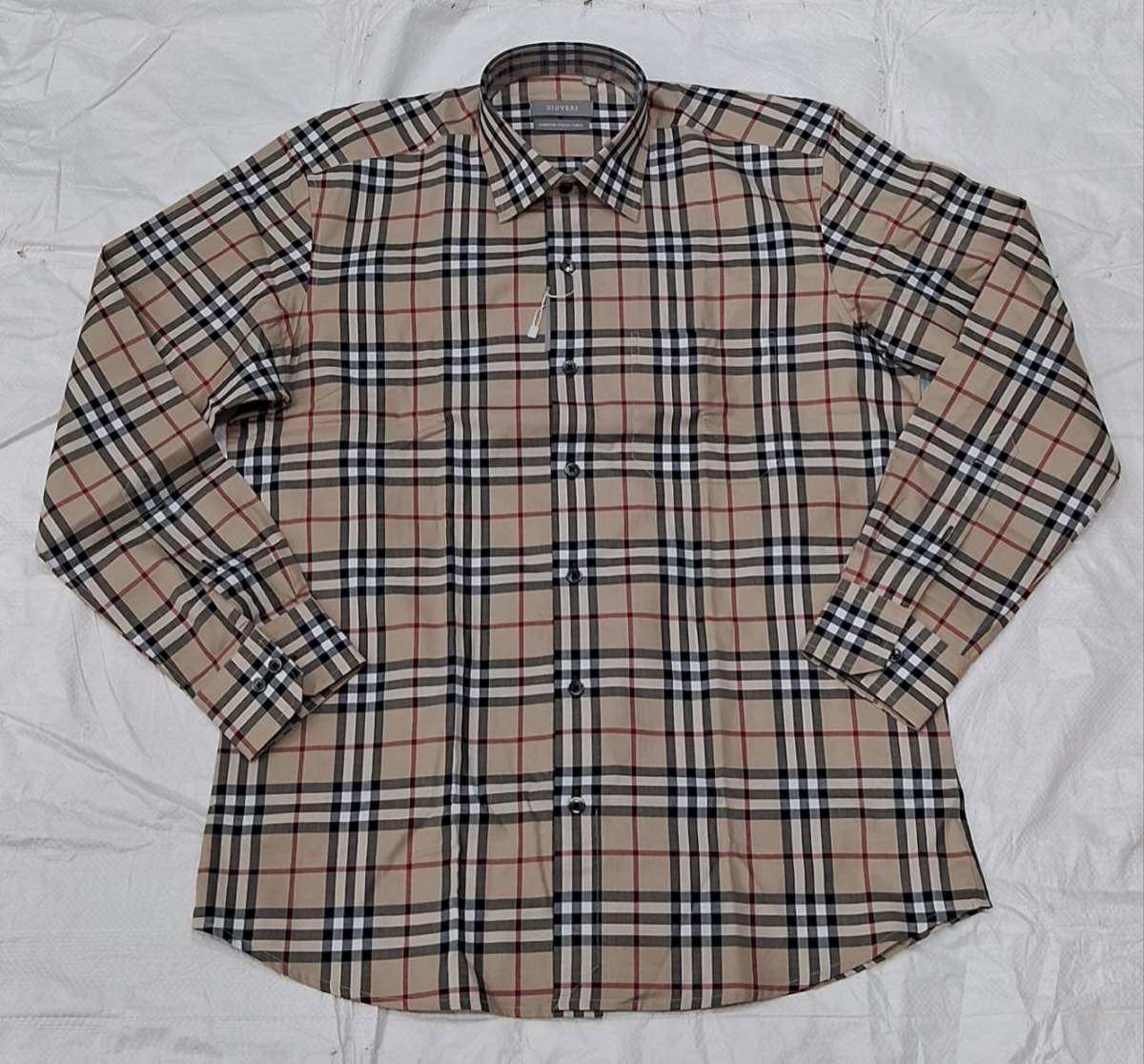
The cover shirt is a good illustration of the last group: a beige ground crossed with black, white and red lines in a large repeat. It is a handsome shirt for weekends and relaxed social plans, worn with plain dark chinos or denim, but its scale and number of colours place it outside the office. For workdays, look to the quieter checks in the checked shirts entry.
Formality depends on scale and contrast
Whether a shirt is striped or checked matters less than two other qualities: the scale of the pattern and the contrast between pattern and ground. A fine, low-contrast stripe is about as formal as a patterned shirt gets. A fine, low-contrast check sits only a little below it. As the pattern grows larger and the colours more contrasting, both move steadily towards casual wear — but checks get there sooner.
A pattern you notice from across the room is a weekend pattern. A pattern you only see up close belongs in the office.
That simple test — can I see the pattern clearly from a few metres away? — is a reliable guide in the morning. Our colours and patterns guide arranges the common shirt patterns along this same scale.
Which is better for the office?
For conservative environments — law, banking, senior client meetings — fine stripes have the edge. They pair naturally with a suit and tie and keep the visual message precise. Checks are equally professional in small scales, but they feel more approachable, which suits internal meetings, creative workplaces and the end of the week.
A practical balance for most capsule office wardrobes is one or two fine stripes and one or two small checks alongside the solid whites and blues. That gives variety across the week without asking you to think hard about any single outfit. If you are building that wardrobe from scratch, see how to build a versatile office shirt wardrobe.
Pairing with ties, jackets and trousers
Combining patterns follows one principle: vary the scale. If the shirt has a fine stripe, choose a tie with a larger pattern or a plain solid; never a tie with a stripe of the same width, which creates a distracting shimmer. The same logic applies to checks. The tie section of the shirt styling guide sets out combinations in more detail.
Under a jacket
A striped shirt under a plain navy or charcoal jacket is a classic business look. A checked shirt under a plain jacket is softer and works especially well with textured cloths. Avoid a checked shirt under a checked jacket unless the scales are very different. Our essay on coordinating shirts and blazers explains this in practice.
With trousers
With either pattern, keep trousers plain. Pick up one of the darker tones from the shirt — navy from a blue stripe, brown from a tan check — and the outfit looks considered. More on this in how to coordinate formal shirts with trousers.
Beyond stripes and checks
Some shirts sit outside both families. Geometric repeats such as diamonds, small dots and woven motifs have their own character, and they are worth understanding as a separate group rather than forcing them into the stripe-or-check question.
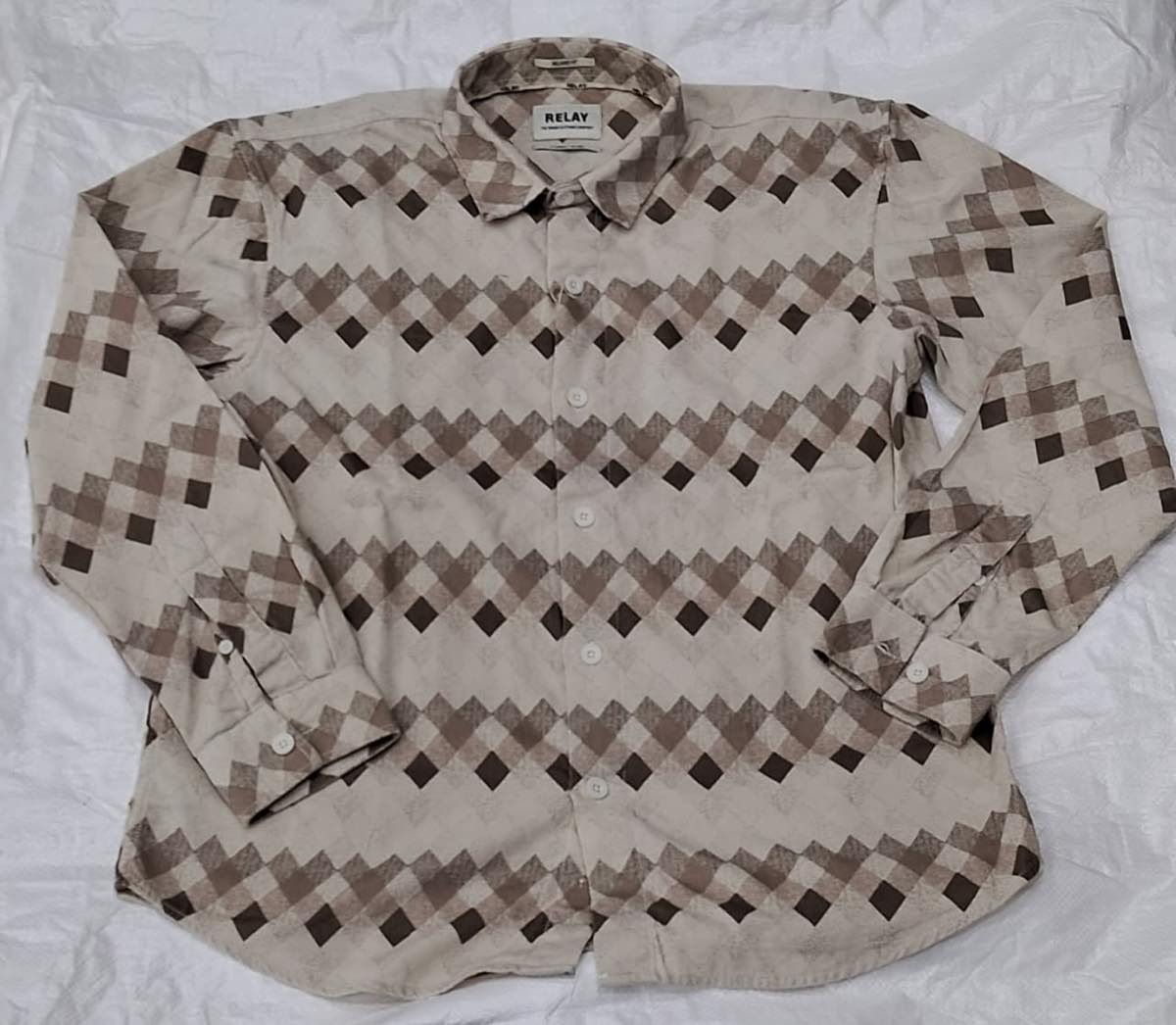
A diamond pattern like this one is decorative rather than structural. It works best off duty, with plain trousers in a colour drawn from the print and the collar left open. In a business context, the more reliable options remain stripes and small checks.
Choose a stripe for formal meetings, suits and ties, and a lengthening line. Choose a check for approachable office days, textured jackets and relaxed Fridays. Choose a solid when you plan a patterned tie or jacket.
Choosing with confidence
Stripes and checks are not rivals so much as tools for different days. Stripes bring direction, precision and a slightly more formal tone; checks bring warmth, ease and a friendlier presence. Keep the scale small and the contrast gentle for office wear, keep trousers plain, and vary the scale whenever you combine patterns. Follow those principles and both families will earn their place in your wardrobe.
To compare current striped and checked formal shirts in person, visit Options Mall in Vile Parle West or call +91 8369381345. Directions and contact details are on the contact page.