How to Coordinate Shirts and Blazers
A blazer changes everything about a shirt — its formality, the way its collar sits, how much of it shows. Learn to choose the shirt for the jacket, not just for the day.
Options Mall Menswear Journal — Mumbai
A blazer frames a shirt. Once a jacket goes on, only a narrow vertical strip of the shirt front remains visible, along with the collar and a little cuff at each wrist. That small area does a lot of work: it carries the colour contrast of the outfit, it frames the tie or the open neck, and it decides whether the jacket looks crisp, relaxed or out of place. Coordinating shirts and blazers is therefore less about the shirt as a whole and more about these few visible parts. This essay explains how to think about contrast, pattern, collar and fit when a jacket is involved, with examples from the boardroom to the dinner table.
Blazer, sports jacket or suit jacket?
It helps to be clear about the jacket first. A suit jacket is made to be worn with matching trousers and is the most formal of the three. A blazer, traditionally navy, is a separate jacket with a smooth cloth and a clean finish that sits between formal and smart-casual. A sports jacket is more textured and relaxed — tweeds, hopsacks, linens and checks. The more formal the jacket, the more restrained the shirt should be. The blazer section of the styling guide sets out this hierarchy visually.
Contrast: the shirt as the lightest layer
The classic structure for business dressing is a light shirt between a darker jacket and darker trousers. A white or light blue shirt under a navy blazer is the clearest example: the shirt draws the eye towards the face and the jacket provides a strong frame around it.
As the shirt darkens, the outfit becomes more relaxed and more evening-oriented. A mid-blue shirt under a grey jacket is gentle and approachable. A dark shirt under a dark jacket is a deliberate, modern look that suits evenings far better than meetings. If in doubt, keep the shirt lighter than the jacket.
Under a jacket, the shirt is the light in the frame. Keep it lighter than the cloth around it and the outfit will almost always look composed.
Reliable colour pairings
- Navy blazer: white, light blue, pale pink, lavender, fine blue stripes.
- Charcoal or grey jacket: white, light blue, lilac, soft pink, small blue checks.
- Brown or tan sports jacket: cream, pale blue, ecru, soft green or a small check with brown in it.
- Black jacket (evening): white, pale grey, black — kept simple and sharp.
The light blue and white entries in our colour guide explain why these two are the jacket's natural partners.
Pattern and texture between shirt and jacket
When combining a shirt with a jacket, the rule is the same as for ties: vary the scale. A plain jacket accepts almost any shirt pattern at office scale. A patterned jacket — a check or a herringbone with visible texture — looks best over a plain or very finely patterned shirt. Two patterns of similar size compete and create a restless effect.
Texture follows a similar logic. A smooth navy blazer pairs naturally with smooth poplin or twill. A textured sports jacket feels more at home with an oxford or a textured cotton. Matching the surface character of shirt and jacket makes the outfit look intentional.
Printed shirts under relaxed jackets
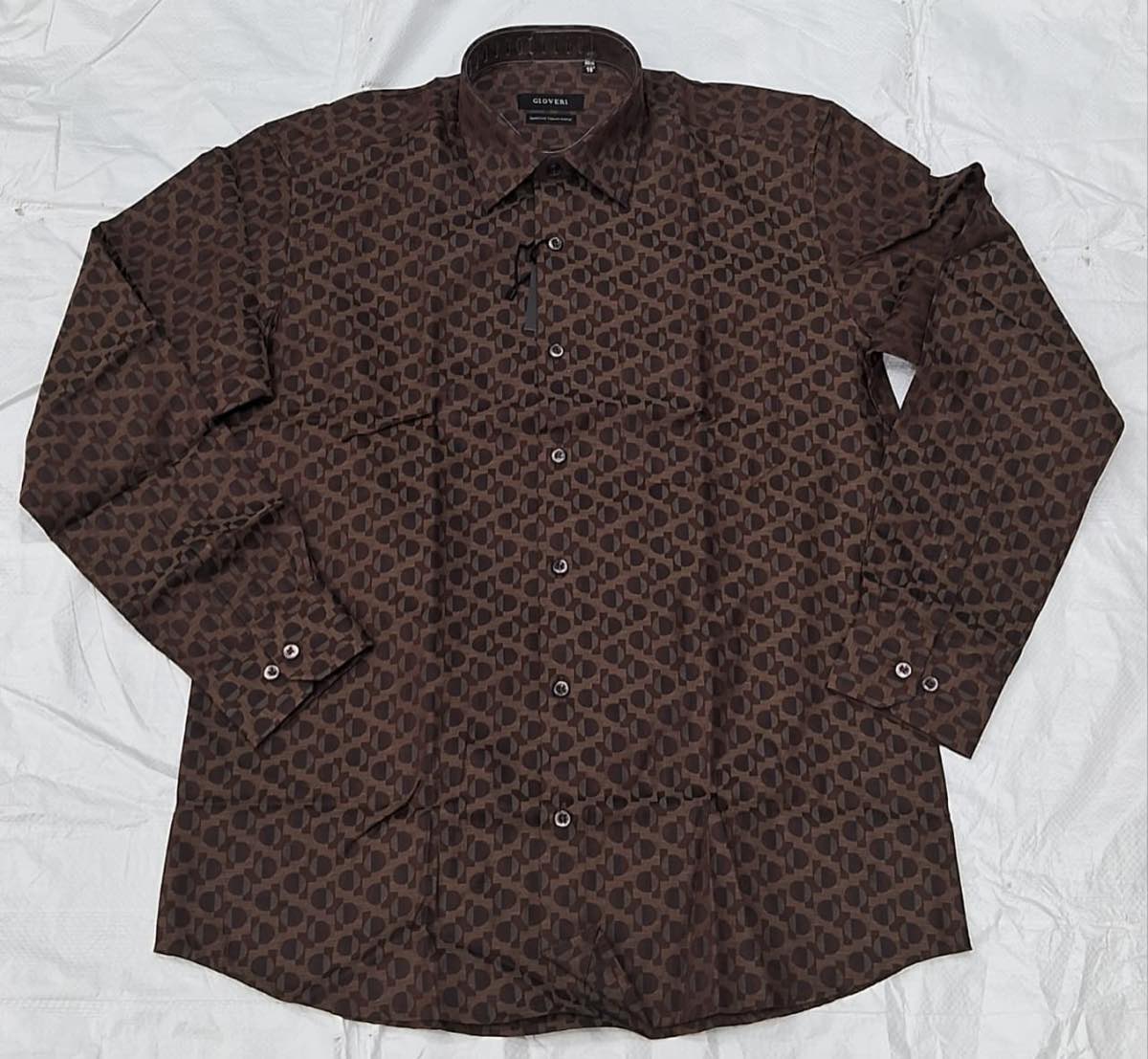
Printed shirts and jackets can work beautifully together outside the office. The trick is to let the jacket calm the print down. The brown geometric shirt on the cover is a good example: under a plain navy, charcoal or camel unstructured jacket, its dense, tonal print reads as rich texture rather than pattern, and it makes an excellent dinner or celebration outfit with plain dark trousers and an open collar.
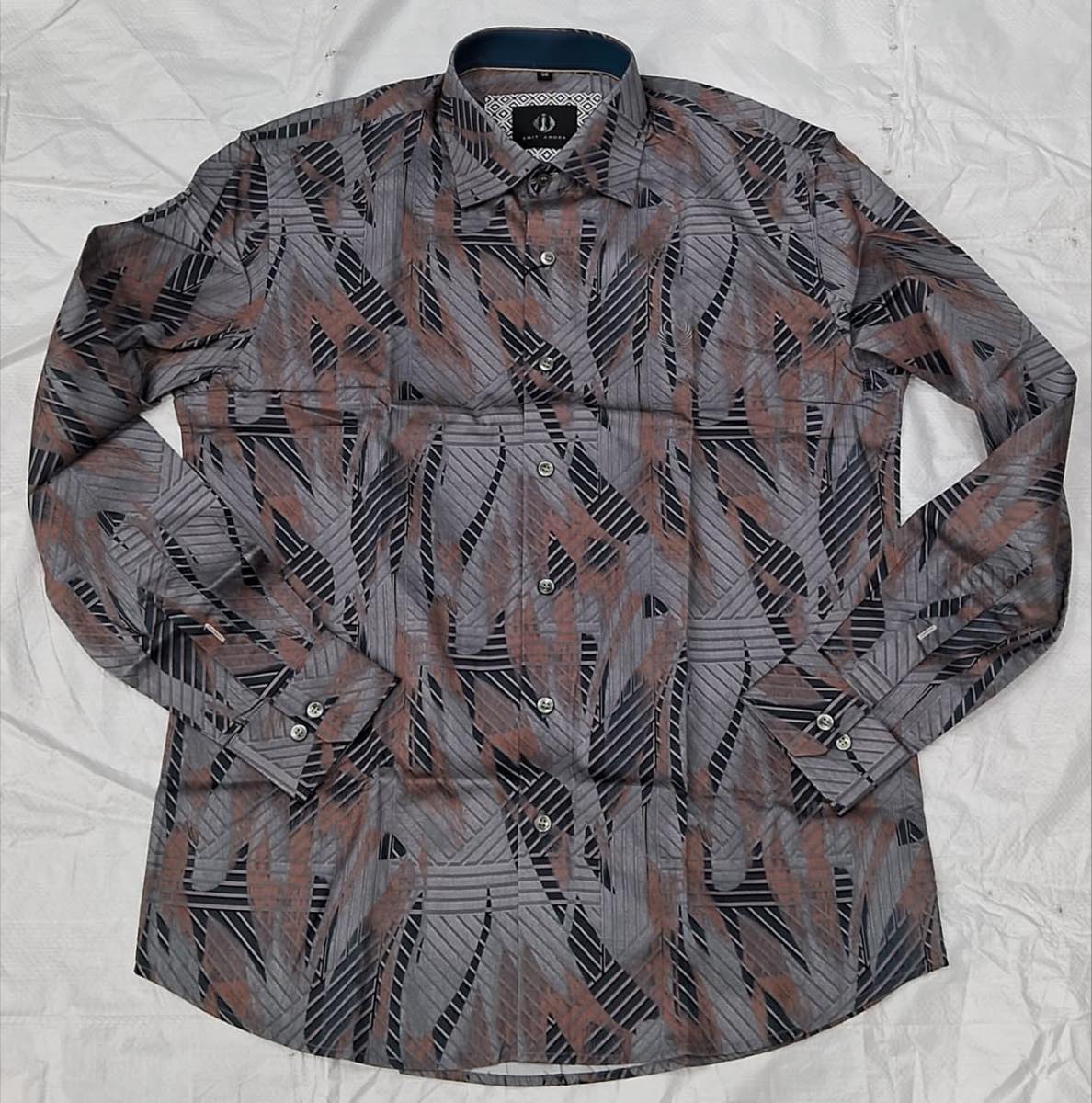
The grey leaf print works on the same principle. Choose a jacket in one of the print's darker tones — charcoal here — and keep the trousers plain. Leave the tie at home; a printed shirt is the outfit's focal point and does not need a second one. In business settings, however, return to solids, fine stripes and small checks.
Collar choice and the tie question
Under a jacket, the collar must hold its shape. A collar that is too short or soft collapses under the lapels; one with firm interlining and collar stays stands neatly above the jacket collar. With a tie, a semi-spread or spread collar balances the jacket's lapels well. Without a tie, a collar with a little height and a firm stand — or a button-down for relaxed jackets — prevents the collar from disappearing inside the jacket.
The collar studio explains each style, and our essay on how to choose the right shirt collar covers how collar width relates to lapel width and tie knot.
With a jacket on, aim for a small band of shirt collar above the jacket collar at the back of the neck and a little shirt cuff — roughly a finger's width — at each wrist. Those two lines of white or blue make the whole outfit look finished.
Fit under a jacket
A shirt worn under a jacket needs to be neat but not tight. Excess fabric bunches at the back and around the waist, which pushes the jacket out of shape; too little room restricts the arms and pulls at the buttons. A tapered slim or contemporary fit usually sits best under a modern jacket, while a regular fit suits a fuller, traditional cut.
Sleeve length is especially important. The shirt cuff should extend just beyond the jacket sleeve. If it disappears, the sleeves are too short; if it shows several centimetres, the shirt sleeves are too long or the jacket sleeves too short. A cuff that fits closely at the wrist also stays in place better.
Four combinations to rely on
- Boardroom: navy suit, white poplin shirt, burgundy or navy tie, black shoes.
- Everyday office: navy blazer, light blue shirt, grey trousers, no tie, brown shoes.
- Smart-casual Friday: textured grey sports jacket, small blue check oxford, navy chinos.
- Evening: plain charcoal unstructured jacket, tonal printed shirt, black trousers, open collar.
For the trouser side of these outfits, see how to coordinate formal shirts with trousers, and for meeting-specific outfits, the meetings wardrobe.
The shirt as the frame's centre
Coordinating shirts and blazers comes down to a handful of decisions: keep the shirt lighter than the jacket for business, vary pattern scale, match texture to texture, choose a collar that holds its shape and make sure the visible edges — collar and cuff — sit just right. Get those details in order and the same jacket can look boardroom-ready on Monday and relaxed on Saturday, simply by changing the shirt beneath it.
To see how current formal shirts look under a jacket, visit Options Mall in Vile Parle West or call +91 8369381345. Bring your blazer along if you like; directions are on the contact page.