Understanding Shirt Construction and Details
A shirt is a set of small engineering decisions. Knowing what the yoke, placket, seams and buttons do helps you judge quality — and choose a shirt that lasts.
Options Mall Menswear Journal — Mumbai
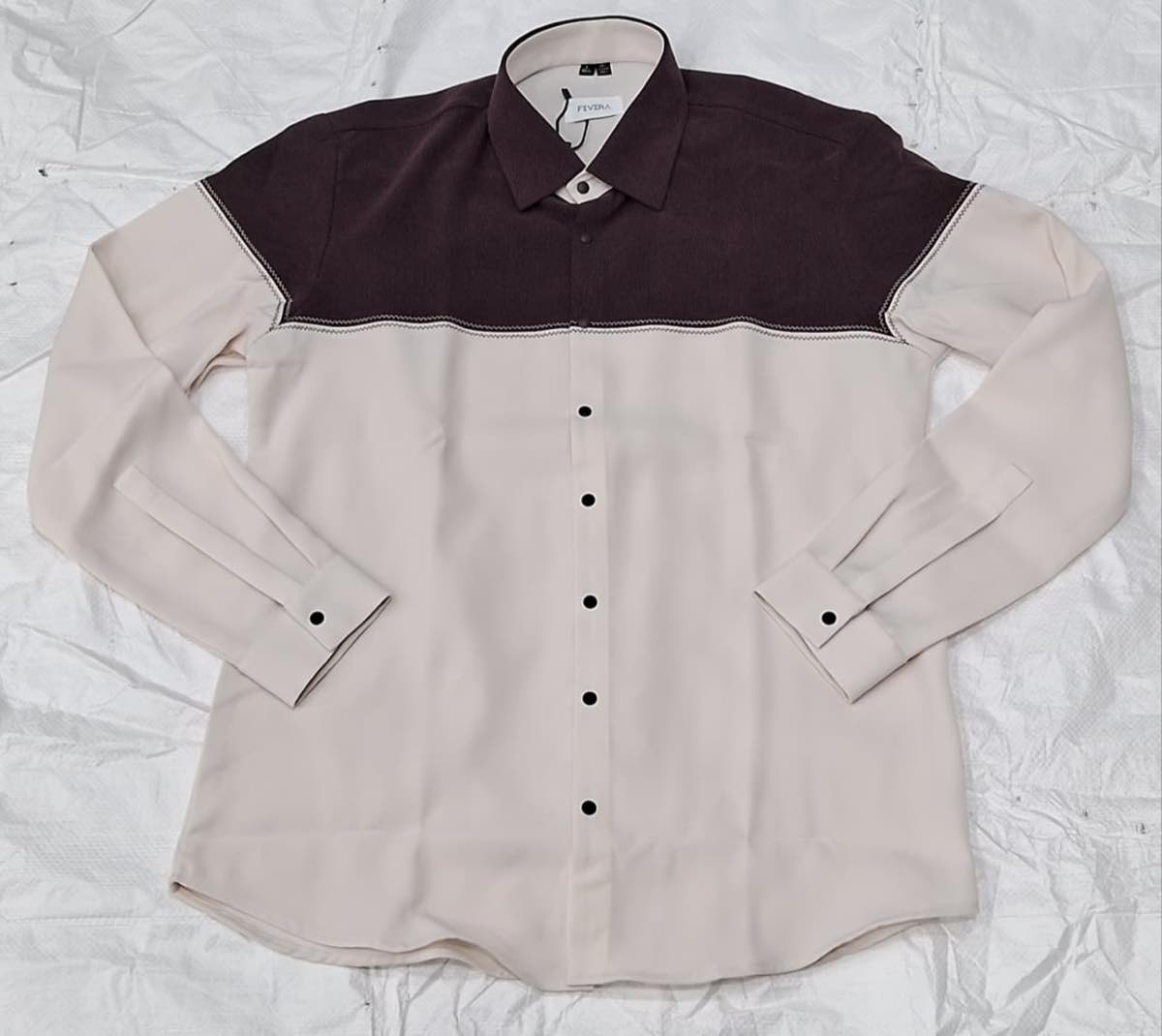
From a distance a shirt looks simple: a body, two sleeves, a collar and a row of buttons. Up close it is a carefully engineered garment of a dozen or more pattern pieces, each shaped to sit against a moving body and to survive many washes. Understanding how a shirt is built is the most reliable way to judge its quality, because good construction tends to show itself in details anyone can learn to read: the way the collar rolls, the neatness of the seams, the cut of the yoke and the sewing of the buttons. This essay walks through the main parts of a formal shirt, explains what each does and suggests what to look for when you try one on.
The anatomy of a shirt
Most formal shirts share the same basic components:
- Collar and collar stand — the visible collar and the band that lifts it around the neck.
- Yoke — the panel across the shoulders that joins front and back.
- Front panels and placket — the two fronts and the strip that carries the buttons and buttonholes.
- Back panel — sometimes with pleats or darts for shaping.
- Sleeves, sleeve plackets and cuffs — including the small opening above the cuff.
- Hem — usually curved on a formal shirt so it stays tucked.
The details section of our Collar & Cuff Studio illustrates these parts, and this essay explains how each is made.
The yoke: the shirt's shoulders
The yoke is the panel that runs across the top of the back and over the shoulders. It carries the weight of the shirt from the shoulders and gives the back its shape. It is one of the most important parts for fit, because it determines where the shoulder seams fall and how cleanly the back hangs.
The cover shirt makes the yoke unusually easy to see: a burgundy contrast yoke sits across the shoulders of a cream body, edged with fine piping where the two meet. Contrast like this is a design choice — it gives a relaxed, distinctive look suited to evenings and smart-casual occasions — but it shows exactly where the yoke sits on every shirt. On a plain formal shirt the yoke is cut from the same cloth and almost invisible, yet doing the same job.
Split yoke and single yoke
A split yoke is made from two pieces joined by a seam at the centre back. Because each half can be angled slightly, it can follow the slope of each shoulder more precisely, and on striped cloth it creates a neat chevron at the centre. A single yoke is cut in one piece and is equally common and perfectly serviceable. Many shirts also have a double-layered yoke, with an inner lining layer, which adds strength and gives a cleaner finish inside.
The yoke is where a shirt hangs from. If it sits right on your shoulders, everything below it has a chance to fit.
Collar construction
A collar is made of an outer layer, an inner layer and an interlining between them that controls its stiffness. A fused interlining is bonded to the cloth with heat, giving a crisp, consistent collar that is easy to care for. A non-fused or sewn interlining sits loose between the layers, giving a softer roll that moves more naturally. Both have their place; fused collars suit sharp office dressing, while softer collars suit relaxed wear.
Look for a smooth, even curve where the collar folds over the stand, points of equal length, and channels for collar stays in formal styles. Collar shape — point, semi-spread, spread, cutaway or button-down — is a separate subject, covered in the collar studio and in our essay on how to choose the right shirt collar.
Placket and buttons
The placket is the strip down the front of the shirt that carries the buttonholes. A front placket is a visible folded band, the most common style and slightly less formal. A French front has no visible band — the edge is simply folded under — for a clean, smooth front. A concealed or fly-front placket hides the buttons entirely behind a flap, giving a minimal look suited to evening wear.
Buttons should be sewn securely, ideally with a short thread shank that lets the button sit flat over the thickness of the placket. Buttonholes should be densely stitched with no loose threads. Dark buttons on a light shirt, as on the cover shirt, are a design detail worth noticing; on formal office shirts, buttons usually match or tone with the cloth.
Seams and stitching
The seams joining the sleeves and side panels need to be strong and neat inside and out. A flat-felled seam encloses the raw edges of the fabric within the seam itself and is stitched twice, making it very durable and clean on the inside. Many quality shirts use it along the sides and sleeves. An overlocked seam finishes the raw edges with a looping stitch; it is functional and widely used.
Whatever the method, look for small, even stitches that lie flat without puckering. Fine stitching generally indicates careful sewing, and seams that do not pucker after washing suggest a well-matched thread and fabric. On patterned shirts, check whether stripes or checks line up at the pocket, placket and yoke — a sign of attention during cutting.
Turn back the cuff and look at the side seam: it should be flat and tidy. Run a finger along the collar edge: it should be smooth, with no bubbling. Look at the stripes at the placket: they should line up. These three checks reveal more than any label.
Cuffs, pleats and darts
Cuffs are constructed much like collars, with an interlining for structure. Barrel cuffs fasten with one or two buttons; French cuffs fold back and fasten with cufflinks. The small sleeve placket above the cuff, sometimes with its own button, lets the cuff open wide enough to roll the sleeve. The cuff studio and our essay on understanding formal shirt cuffs cover the styles in detail.
At the back, box pleats at the centre or side pleats near the shoulders add room for movement in fuller cuts. Darts — tapered seams in the lower back — remove fabric at the waist for a closer fit. These are closely linked to fit; see the slim fit and classic fit profiles to understand how each cut uses them.
Decorative details
Beyond the structural parts, many shirts carry decorative details: contrast collars and yokes, piping, coloured buttons, embroidery or appliqué. These belong to the shirt's style rather than its construction, and they are best judged by the occasion they suit.
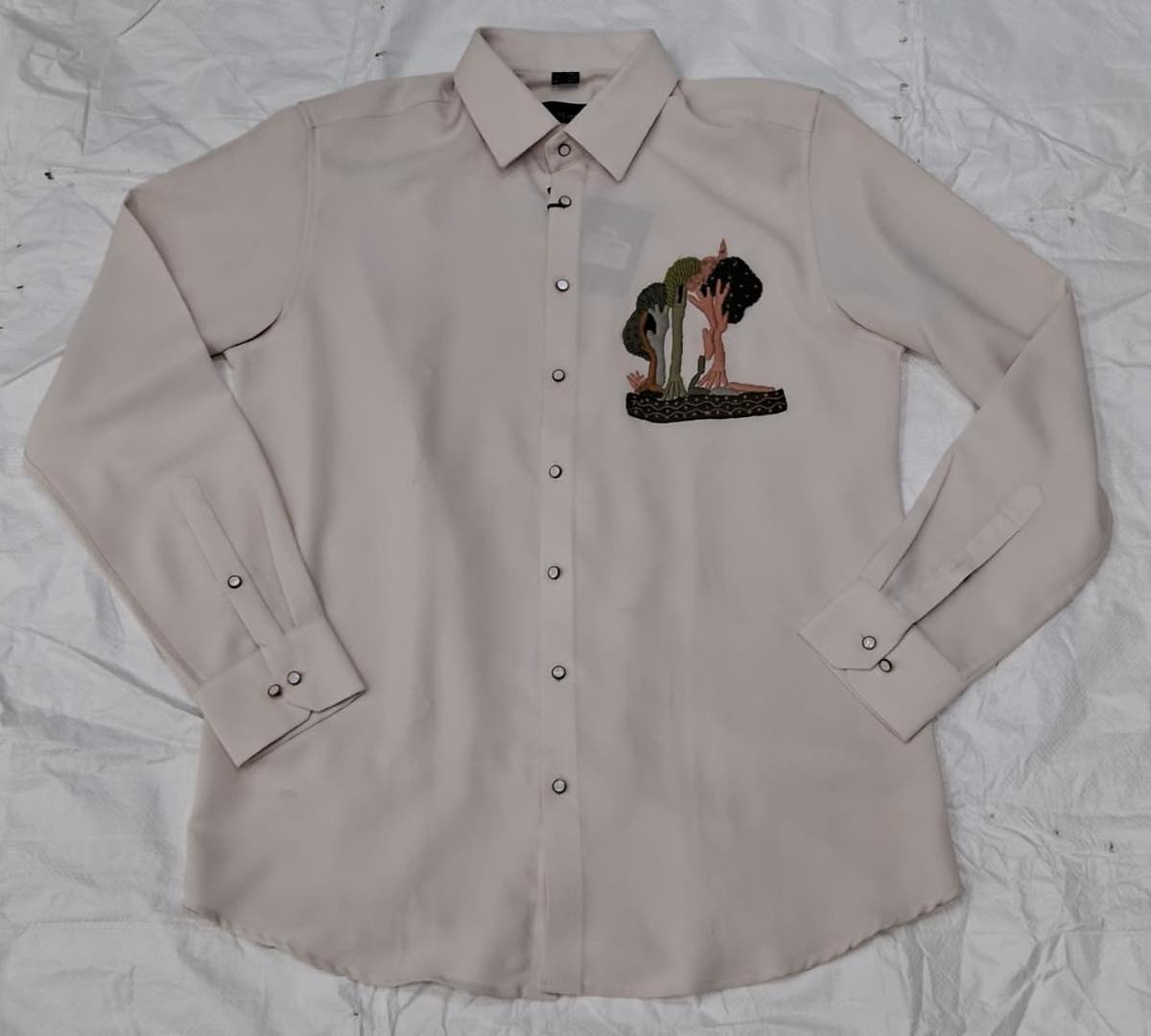
An embroidered patch like the one on this cream shirt should be neatly finished, with the backing secure and no puckering of the surrounding cloth. It turns a simple shirt into a conversation piece for weekends and evenings. For the office, the most refined construction is usually the least conspicuous, as explained in our essay on common formal shirt styling mistakes.
Reading a shirt
Understanding shirt construction turns shopping into a skill. A well-set yoke that matches your shoulders, a collar that rolls evenly, a neat placket, secure buttons and flat, clean seams are the marks of a shirt that will fit well and last. Decorative details add style, but the structure underneath decides how the shirt behaves after many washes. Combine that knowledge with the right fabric and fit and you can judge any formal shirt with confidence.
To examine current formal shirt styles and their details up close, visit Options Mall in Vile Parle West or call +91 8369381345. Directions and contact details are on the contact page.